
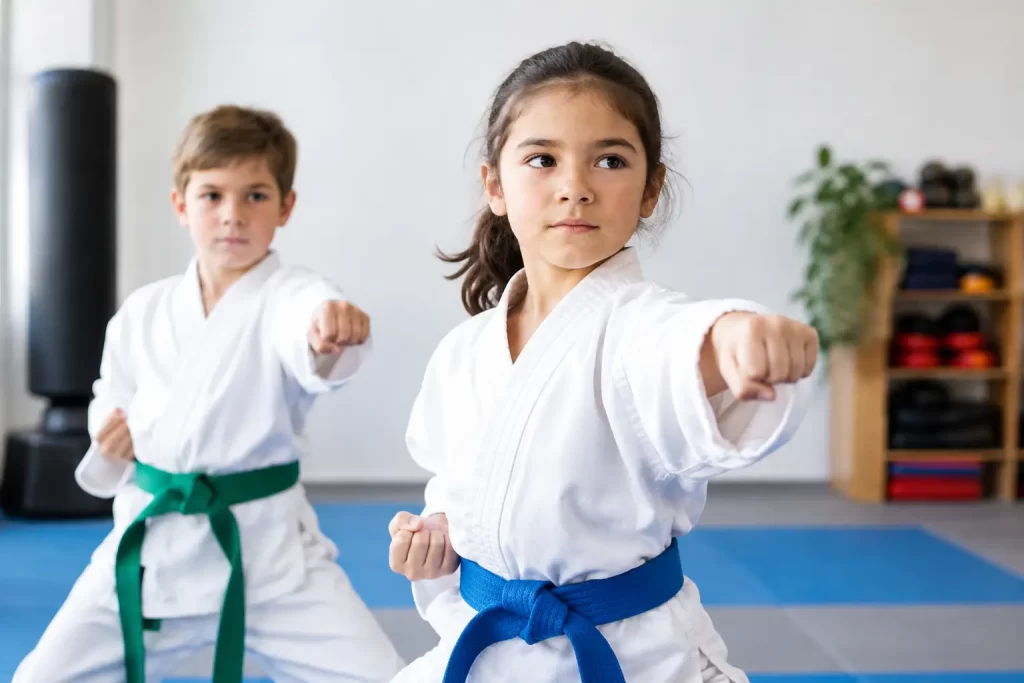
A child who walks onto the mats for the first time may be quiet, restless, unsure, or full of energy. A quality youth martial arts class gives that child a positive place to grow. They learn how to listen, move with purpose, handle challenges, and treat training partners with respect. Over time, those lessons can show up at school, at home, and in the way they carry themselves around others.
For parents, the goal is not simply to keep kids busy after school. The right program combines physical activity with structure, practical skills, and a community where children are expected to work hard while being supported every step of the way.
Why Youth Martial Arts Builds More Than Athletic Ability
Martial arts gives kids a clear system for progress. They arrive, line up, listen to coaching, practice a skill, and keep improving through repetition. That structure is valuable for children who need a productive outlet for extra energy, as well as children who need encouragement to step outside their comfort zone.
The physical benefits are easy to see. Kids improve coordination, balance, mobility, body awareness, and overall conditioning. They move in ways that regular screen time and sedentary school days do not always provide. Classes can also help children develop healthy routines around effort, recovery, and consistency without making exercise feel like a chore.
The bigger difference is often mental. Learning a new technique can be frustrating at first. A child may not get a movement right, may lose a position during sparring, or may struggle to remember a sequence. With patient coaching, they learn that mistakes are part of training, not a reason to quit. That lesson creates resilience that reaches far beyond the academy.
Confidence Comes From Practice, Not Hype
Real confidence is not telling a child they are great at everything. It is helping them see that they can improve when they show up, pay attention, and keep trying. Martial arts makes that process visible.
A student who once struggled to make eye contact may begin answering questions in class. A child who hesitated to partner with others may become more comfortable working with teammates. As techniques become familiar and physical conditioning improves, kids often stand taller and speak with more certainty.
This does not mean every child becomes loud or highly competitive. Confidence can look different from one student to the next. For some, it means taking initiative. For others, it means staying calm in a difficult moment or being willing to try something new. A strong program meets children where they are and gives them room to grow at their own pace.
Discipline That Makes Sense to Kids
Parents often look to martial arts for discipline, but discipline works best when it is taught as a useful skill rather than a punishment. Kids learn that arriving on time, wearing the correct gear, listening carefully, and giving full effort are all ways to respect themselves, their coaches, and their teammates.
In a well-run class, expectations are clear. Children know when it is time to have fun, when it is time to focus, and how to reset when they become distracted. They also learn that earning progress requires consistent effort. Belts, stripes, and other milestones should recognize growth, but the daily habits behind those milestones matter most.
That structure can be especially helpful for school-age children balancing homework, activities, and social pressures. Martial arts does not magically solve every behavior challenge, and it should never replace support a child may need from parents, teachers, or health professionals. It can, however, give children a dependable environment where accountability is practiced every week.
Self-Defense Starts With Awareness and Control
Parents understandably want their children to be safer. Good youth martial arts instruction teaches practical self-defense while placing safety, awareness, and sound judgment first.
For younger students, that begins with simple habits: maintaining personal space, using a clear voice, recognizing uncomfortable situations, and finding a trusted adult. As kids mature, they can learn how to manage contact, escape common grabs, protect themselves on the ground, and remain composed under pressure.
The goal is not to encourage fighting. In fact, a responsible academy reinforces that physical skills are a last resort. Children should understand how to avoid unnecessary conflict, walk away when possible, and use their training only to protect themselves or another person from immediate harm.
Brazilian Jiu-Jitsu can be particularly useful because it teaches control, leverage, and positional awareness. Striking arts such as boxing and kickboxing can build distance management, coordination, and defensive movement. The best approach depends on a child’s age, maturity, goals, and comfort level. A program that includes safe, supervised training gives kids useful tools without glorifying aggression.
What Parents Should Look for in a Program
Not every martial arts academy provides the same experience. A flashy facility or a long list of promised benefits matters less than what happens in class. Visit, watch how instructors speak to students, and notice whether children are active, engaged, and treated with respect.
Look for coaches who can teach real martial arts skills in an age-appropriate way. They should be able to correct behavior firmly without humiliating kids, explain techniques clearly, and create a class where beginners are not overlooked. Experienced instructors understand that a seven-year-old and a teenager need different coaching, pacing, and expectations.
Safety matters just as much. Classes should have organized warmups, supervised partner work, clean training areas, and rules designed to prevent careless behavior. Contact training should be introduced progressively, not forced on a child before they are ready. Kids need challenges, but they also need to trust that their coaches are paying attention.
Culture is another deciding factor. The best academies build a team environment, not a room full of children competing for attention. Students should be encouraged to support training partners, celebrate effort, and welcome new classmates. At Champions BJJ, families are welcomed into a community that values serious training, personal responsibility, and belonging on and off the mats.
Helping Your Child Get Started Strong
The first few classes can feel unfamiliar, especially for a child who has never played a contact sport or joined a structured activity. Let them know they do not need to be the strongest, fastest, or most experienced person in the room. They only need to show up willing to learn.
Parents can help by keeping expectations simple. Encourage consistency instead of demanding instant results. Ask what they learned, who they worked with, or what felt challenging rather than focusing only on whether they won. Those questions reinforce the habits martial arts is meant to build.
It also helps to give the process time. Some children love their first class. Others need several visits before they feel comfortable with the routine, the uniform, or working with partners. If the coaching and environment are right, steady attendance usually gives a child the best chance to settle in and gain confidence.
A martial arts class may begin as an after-school activity, but it can become something more meaningful: a place where your child learns to work through hard things, take pride in progress, and become part of a team that expects their best. The first step is simply giving them a place to start.
