
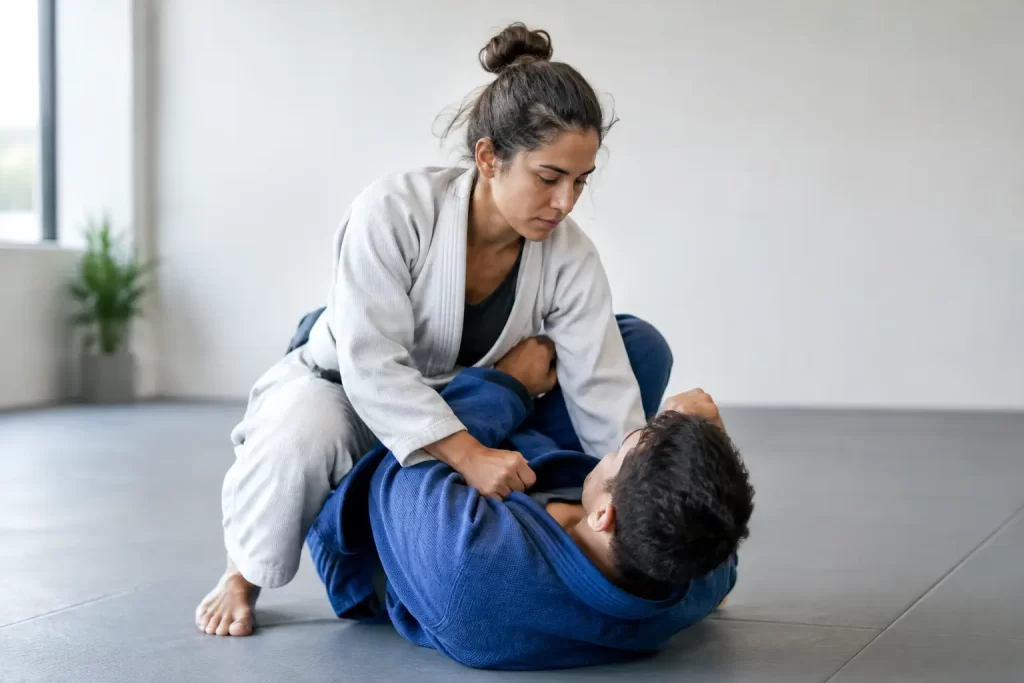
The first difficult round can be humbling. You may feel out of breath, stuck underneath a training partner, and unsure what to do next. Then your coach gives you one clear adjustment, you try again, and something changes. That repeatable process is how jiu jitsu builds resilience: not by making every class easy, but by showing you that hard moments can be met with calm effort, good decisions, and a willingness to keep learning.
Brazilian Jiu-Jitsu is a physical skill, but the lessons do not stay on the mats. Adults bring them into demanding workdays, family responsibilities, fitness goals, and stressful conversations. Kids carry them into school, friendships, and the everyday challenges of growing up. Training gives people a safe place to practice responding to pressure instead of avoiding it.
How Jiu Jitsu Builds Resilience, One Round at a Time
Resilience is not pretending that setbacks do not hurt. It is the ability to recover, adjust, and continue moving forward. In Jiu-Jitsu, that lesson is built into every class.
You will tap. You will make mistakes. A technique that worked last week may not work against a different partner today. Those moments are not signs that you do not belong. They are information. With experienced coaching and consistent practice, students learn to ask better questions: What position am I in? What did I miss? What can I do differently next time?
That shift matters. Instead of treating failure as a verdict, you begin treating it as feedback. A tough round becomes a chance to improve your posture, timing, breathing, or patience. Over time, the urge to panic is replaced by the habit of problem-solving.
Jiu-Jitsu also makes progress visible. At first, escaping a difficult position may feel impossible. A few weeks later, you recognize the setup. A few months later, you can stay composed, defend intelligently, and work your way out. Those small wins create real confidence because they are earned through effort.
Pressure Teaches Composure
There is a difference between reading about stress and feeling it in a controlled training environment. During live drills, your heart rate rises and your training partner is actively trying to improve their position. You have to think while tired. You have to breathe when you would rather rush. You have to make choices instead of freezing.
This is one reason Jiu-Jitsu is so valuable for people with busy, high-pressure lives. The mats give you a structured outlet after a long day, but they also train a useful response to stress. You cannot force every situation. You cannot control every opponent. You can control your posture, your breathing, your attention, and your next decision.
That does not mean training removes stress from life. It gives you practice handling it. A difficult meeting, a packed schedule, or an unexpected setback may still feel challenging, but many students find they recover faster because they have learned not to let discomfort make every decision for them.
The tap is a lesson in smart persistence
Tapping is one of the clearest resilience lessons in Brazilian Jiu-Jitsu. It teaches students that giving up a position is not the same as giving up on themselves. A tap protects training partners and keeps learning moving forward.
For beginners, this can be a powerful mindset change. Strong people are not the people who ignore every warning sign or refuse help. Strong people know when to reset, learn, and return with a better plan. That lesson applies well beyond martial arts.
Consistency Builds Trust in Yourself
Motivation gets people through the door. Consistency is what changes them.
Most students do not feel confident on day one. They may worry about being out of shape, not knowing what to wear, or slowing down the class. The truth is that everyone starts somewhere, and a quality academy makes room for beginners to learn at a sustainable pace.
Showing up regularly builds a different kind of confidence than a quick fitness challenge or a single great workout. You begin to trust yourself because you have proof that you can keep commitments, even when you are tired or busy. You learn that improvement is usually not dramatic. It comes from attending class, practicing fundamentals, asking questions, and returning after a hard day.
For adults, this can restore a sense of momentum that gets lost in a routine of work and responsibilities. For children, it reinforces the value of practice over instant results. A child who keeps working on a difficult movement learns that effort has a payoff, even if it takes time.
The pace should fit the student. Training hard is valuable, but resilience is not built by ignoring injuries or burning out after two weeks. Good coaching helps students challenge themselves while respecting their current fitness level, recovery needs, and experience. The goal is sustainable progress.
A Team Makes Difficult Things More Manageable
Jiu-Jitsu is individual in the sense that you are responsible for your own effort. But no one develops alone. You need training partners who give honest resistance, coaches who correct details, and a culture where people want to see each other improve.
That community is especially important for newcomers. Walking into a martial arts academy can feel intimidating when you have never trained before. A welcoming room changes the experience. You are not expected to know everything. You are expected to listen, work, respect your partners, and keep showing up.
At Champions BJJ, that shared effort is part of the Champions Family mindset. Students train with people of different ages, professions, fitness levels, and goals, yet everyone understands the value of being a safe, reliable partner. The person helping you learn an escape today may be the person you encourage through a difficult round next month.
This accountability makes resilience more practical. On the days when motivation is low, a supportive team gives you a reason to attend. On the days when you improve, you have people who understand what that progress required. Belonging does not make training easy. It makes the hard work worth returning to.
Why Jiu Jitsu Resilience Helps Kids and Adults
Kids face challenges that adults do not always see: social pressure, fear of making mistakes, frustration at school, and the need to develop confidence without becoming reckless. Jiu-Jitsu gives them a clear structure for working through those feelings. They learn to follow instructions, control their bodies, communicate respectfully, and try again after a setback.
The confidence built through training is different from empty praise. When a child learns a technique, stays composed during a drill, or earns progress through attendance and effort, they know they did something difficult. That can help them stand taller in school and make better choices around conflict.
For adults, resilience often looks quieter. It may be the ability to leave work stress at the door and focus for an hour. It may be losing weight through a routine you can maintain, gaining the confidence to set boundaries, or realizing that you are more capable than you assumed. Practical self-defense skills can add peace of mind, but the everyday benefit is often the calm confidence that comes from regular training.
Start Where You Are
You do not need to be athletic, flexible, or experienced to begin Jiu-Jitsu. You need a willingness to learn and an environment that takes your progress seriously. The first class may challenge your body and your comfort zone, but it should also show you that you are capable of more than you thought.
Resilience is built when you meet a difficult moment, stay present, and take the next useful step. On the mats, that may mean framing, escaping, breathing, or tapping and starting again. Off the mats, it can mean the same thing: keep your standards high, ask for help when needed, and give yourself enough time to grow.
