
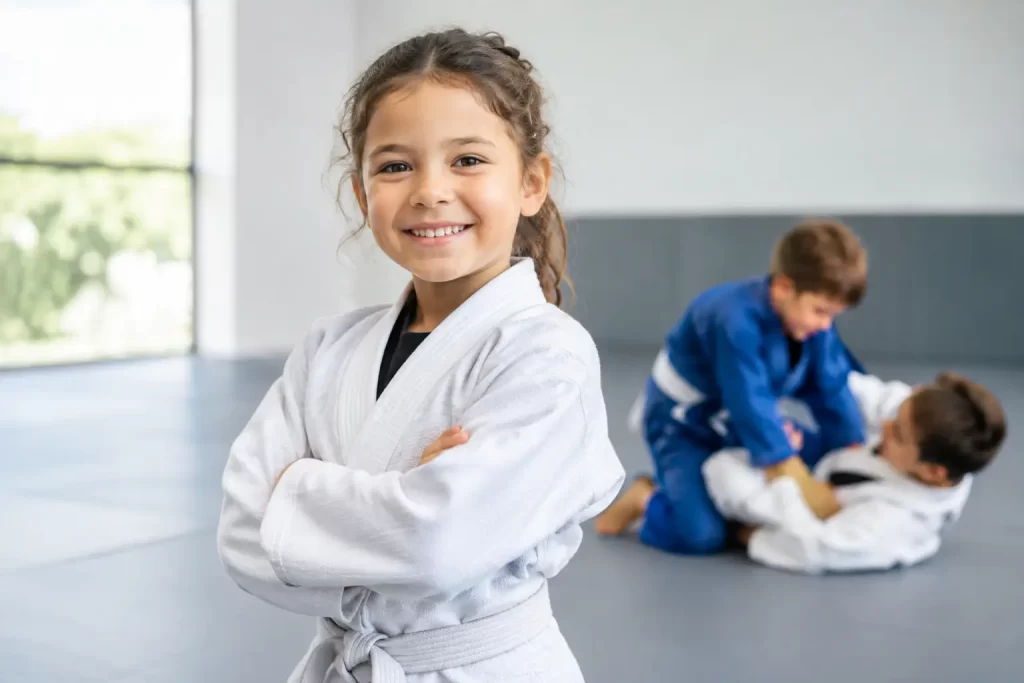
A child who walks onto the mat quietly can leave class standing taller. Not because they were told to be confident, but because they learned a new movement, worked through a challenge, and realized they could do something difficult. That is the everyday value of kids BJJ classes.
Brazilian Jiu-Jitsu gives children a constructive place to move, learn, and grow. They practice real martial arts skills, but the benefits reach far beyond a technique or stripe on a belt. With the right coaching and a supportive team around them, kids learn how to listen, stay calm under pressure, respect others, and keep trying when something does not work the first time.
Why Kids BJJ Classes Work for Growing Children
BJJ is a grappling-based martial art that teaches children how to control distance, balance, and positioning. Instead of relying on size or strength, students learn to use leverage, timing, and smart decision-making. That makes it especially valuable for kids, because it shows them that being smaller does not mean being powerless.
In a well-run class, children are not thrown into complicated techniques or asked to perform like adults. They learn in age-appropriate steps. A coach demonstrates a skill, explains the goal clearly, and gives students time to repeat it with a training partner. Over time, those small wins add up.
The physical side matters, too. Many children spend long stretches sitting at school, doing homework, or using screens. BJJ gets them moving with purpose. They develop coordination, body awareness, mobility, balance, and conditioning while having fun with classmates. For a child who does not connect with traditional team sports, martial arts can be the activity that finally feels like a fit.
Confidence That Comes From Doing the Work
Real confidence is not loud. It is the feeling a child gets when they know they can handle a challenge without giving up or falling apart. Kids BJJ classes create regular opportunities to build that kind of confidence.
A new student may struggle to remember a drill, feel awkward during partner work, or lose a position during a controlled round. Coaches help them reset, make an adjustment, and try again. That process teaches resilience in a way children can understand through experience.
BJJ also gives kids clear evidence of progress. Maybe they learn a proper breakfall, improve their posture, remember a sequence, or earn recognition for consistency and effort. The results are earned one class at a time. When children see their own improvement, they begin to trust themselves more at school, at home, and around new people.
This does not mean every child becomes outgoing overnight. Some kids become more vocal, while others simply become steadier and more comfortable in their own skin. Both are meaningful forms of growth.
A Better Way to Teach Discipline
Discipline is often misunderstood as being strict or silent. In martial arts, discipline is more practical. It means arriving ready to learn, paying attention when instruction begins, treating training partners with care, and following through even when a skill feels challenging.
Children learn quickly that class works better when everyone does their part. They line up, take turns, practice safely, and help maintain a respectful training environment. These expectations are simple, but they carry over. Parents often notice better listening, stronger routines, and more accountability at home.
The key is consistency. One class can be exciting, but long-term training creates the habits. A child who attends regularly learns that improvement is not based on talent alone. Effort, patience, and a willingness to learn matter just as much.
Self-Defense Without Teaching Aggression
Parents understandably want their children to have the confidence to protect themselves. BJJ can help because it teaches control at close range, including how to escape uncomfortable holds, create space, and get back to a safe position.
Just as important, quality instruction teaches judgment. Children should understand that martial arts are not for showing off, starting fights, or proving who is tougher. They are taught to avoid conflict when possible, use their voice, seek help from a trusted adult, and use physical skills only when necessary for safety.
That is one reason BJJ is a strong fit for bullying prevention conversations. A child with training may be less likely to panic if someone grabs or pushes them. They also tend to carry themselves with more awareness. Confidence can discourage unwanted attention, but it should always be paired with respect and self-control.
What a Great Kids Program Should Include
Not every martial arts class is built the same way. Parents should look beyond flashy moves or a crowded schedule and pay attention to how the program is coached. The best environment makes children feel challenged without making them feel overwhelmed.
A strong kids program should have:
- Age-appropriate classes that match a child’s attention span, size, and skill level
- Clear safety rules and instructors who actively supervise partner training
- Structured lessons that combine technique, movement, games, and character development
- A positive culture where effort is recognized and new students are welcomed
- Coaches who can correct behavior firmly while treating every child with respect
It also helps when instructors understand that kids arrive with different needs. One child may need encouragement to speak up. Another may need help slowing down and focusing. A quality coach does not use one approach for every student. They create standards while meeting children where they are.
Is BJJ Right for Shy, Active, or Nervous Kids?
Usually, yes, but the best starting point depends on the child. Shy kids often benefit from the predictable structure of class. They know where to stand, what to practice, and what comes next. Partner drills can also make it easier to build friendships naturally, without the pressure of joining a large group conversation.
Highly active kids benefit from having a positive outlet for their energy. BJJ gives them rules, physical engagement, and a reason to focus. The goal is not to make an energetic child sit still all the time. It is to teach them when to move, when to listen, and how to direct that energy with control.
Nervous children may need a slower introduction. A first class can feel unfamiliar, especially because BJJ involves close-contact training. Supportive coaches can pair beginners carefully, explain the rules, and let children build comfort at their own pace. A free trial class is often the easiest way for parents to see whether the setting feels right.
How Parents Can Help Their Child Succeed
The best support happens before and after class, not from the sidelines. Let your child know that they do not need to be perfect. Their job is to listen, try, and keep showing up. Ask what they learned, what was difficult, and what they want to improve next time.
Avoid putting too much pressure on belts, medals, or being the best in the room. Those can be motivating for some children, but lasting progress comes from enjoying the process. A child who feels safe making mistakes is more likely to stay with training long enough to gain the deeper benefits.
Consistency matters more than intensity. Two regular classes each week will usually do more for confidence and development than a short burst of training followed by a long break. Give your child time to settle into the routine and form connections with coaches and teammates.
At Champions BJJ, kids train in a family-friendly environment where beginners are welcome, standards are clear, and every student has room to grow. The goal is not to turn every child into a competitor. It is to help them become more confident, disciplined, capable, and connected.
The right class will challenge your child, but it should also give them a reason to come back. When they leave the mat proud of the effort they gave, they are building skills that will matter long after class is over.
