
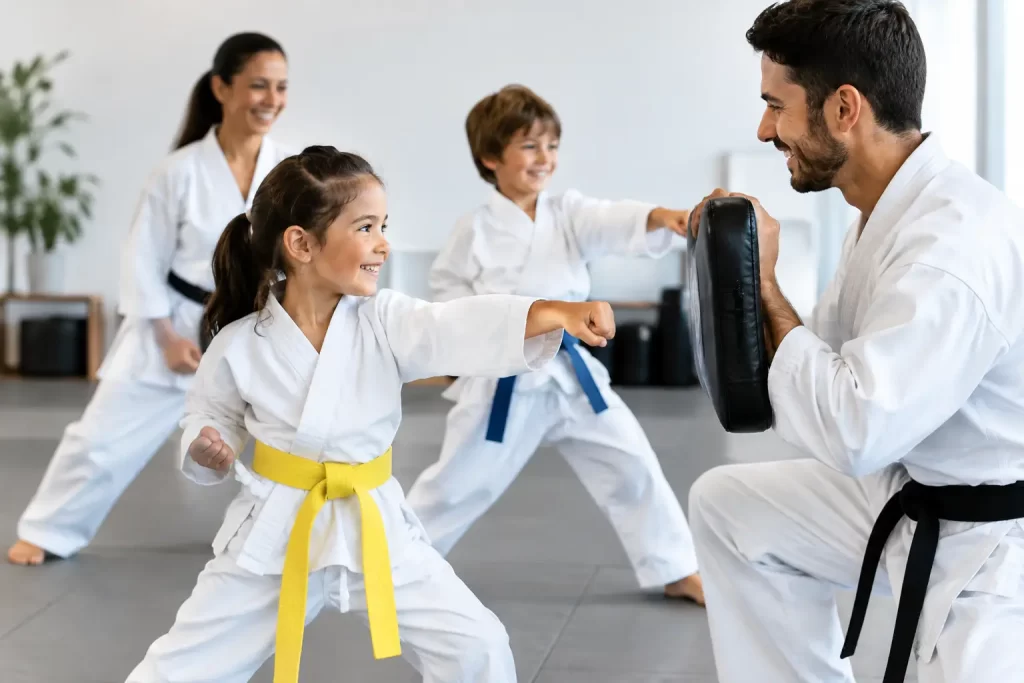
A great family friendly martial arts gym does more than schedule kids’ classes beside adult classes. It gives every person who walks through the door a place to work hard, learn real skills, and feel supported while doing it. For North Houston families, that can mean a child gaining confidence after a difficult school day, a parent finding a healthy outlet after work, or both training as part of the same community.
Martial arts should be challenging. Brazilian Jiu-Jitsu, boxing, kickboxing, and MMA ask students to focus, practice consistently, and become comfortable doing difficult things. The right academy makes that challenge feel motivating rather than intimidating. It gives beginners a clear starting point, keeps safety and respect at the center of training, and celebrates progress at every level.
A Family Friendly Martial Arts Gym Builds Belonging
A family-friendly culture is not about making training easy. It is about making people feel they belong before they have earned a stripe, won a round, or learned every drill. New students should not have to wonder whether they are too old, too out of shape, too quiet, or too inexperienced to start.
At a quality academy, experienced students remember what it felt like to be new. Coaches explain expectations clearly, pair students thoughtfully, and create an environment where questions are welcome. That matters for adults who may be stepping onto the mats for the first time and for children who are still learning how to handle new social situations.
The strongest gyms also build connection beyond the workout. Families recognize familiar faces, teammates encourage one another, and students learn that accountability does not have to feel like pressure. It can feel like having people in your corner who expect your best because they care about your growth.
Serious Training, Taught at the Right Level
Families should not have to choose between a welcoming environment and credible instruction. A good martial arts academy offers both. Kids deserve more than a high-energy activity that keeps them busy for an hour. Adults deserve more than a random workout with punches and burpees. They need structured coaching that develops real technique, awareness, fitness, and discipline.
For children, instruction should be age-appropriate. A younger child may focus on listening, balance, body control, basic movement, and respectful interaction. As students mature, they can take on more technical detail, stronger conditioning, and greater responsibility. The goal is not to rush a child into advanced training. The goal is to help them build skills they can carry into school, sports, and everyday life.
For adults, beginner-friendly does not mean watered down. It means learning fundamentals in a way that makes sense. A first-time Brazilian Jiu-Jitsu student may begin with positions, escapes, and safe drilling before moving into more challenging live training. Someone interested in boxing or kickboxing can develop stance, footwork, defense, and striking mechanics without being expected to perform like a fighter on day one.
Experienced coaches make the difference. They know when to push, when to slow down, and how to help each student train with purpose. Real combat-sports experience brings credibility, but the ability to teach beginners with patience is what makes that knowledge valuable to families.
What Parents Should Look For
Parents often arrive with practical questions: Will my child be safe? Will they be encouraged? Are the coaches paying attention? Will this actually help with confidence and discipline?
The best answer is found in what you see during class. Watch how instructors speak to students. Clear direction, positive correction, and consistent standards are better signs than loud hype alone. Children should be challenged without being embarrassed. They should learn that mistakes are part of practice, then be shown how to improve.
A strong kids program also teaches respect in action. That includes following directions, controlling emotions, taking care of training partners, and returning after a difficult round or drill. These lessons are especially valuable for children dealing with shyness, frustration, bullying concerns, or a lack of confidence. Martial arts cannot solve every problem a child faces, but it can give them a stronger posture, better self-control, and proof that effort leads to progress.
Parents should also consider class structure. Organized warmups, clear skill instruction, supervised partner work, and an appropriate student-to-coach ratio all support a safer, more productive experience. If a gym cannot explain how beginners are introduced to contact or how instructors manage different ages and skill levels, keep looking.
Why Adults Benefit From Training Alongside a Family Culture
A family-centered academy is not only for parents enrolling their children. Adults of all backgrounds benefit from a training environment where people know their names and want to see them improve.
For working professionals, martial arts can become a powerful reset. You leave work behind for an hour, focus on the next technique or round, and walk out having done something demanding for yourself. That can support stress management, fitness, weight-loss goals, and mental clarity without the repetitive routine of an impersonal gym.
For parents, training can also set an example. Children notice when adults commit to learning, show up consistently, and handle setbacks with composure. You do not have to train in the same class as your child for that example to matter. Simply being part of a community that values discipline and healthy effort can shape the whole household.
There is a trade-off to consider. A combat-sports academy is not a drop-in fitness class where every session feels identical. Progress requires regular attendance, patience, and a willingness to be a beginner. But that is exactly why the results can reach beyond physical conditioning. Every class is a chance to practice showing up, paying attention, and doing the work.
The Right Programs Give Families Room to Grow
Not every family member needs the same style of training. One child may thrive in Brazilian Jiu-Jitsu because they enjoy problem-solving and close-range control. Another may love the focus and movement of boxing or kickboxing. An adult may begin with fitness and self-defense goals, then discover a passion for technical grappling or MMA.
A quality academy gives students room to find the path that fits them while maintaining consistent standards across programs. The shared foundation is discipline, respect, conditioning, and practical skill development. The individual experience can still be personal.
At Champions BJJ, that approach means welcoming complete beginners while providing the depth serious students expect. Students can train with coaches who understand combat sports, build confidence through structured instruction, and become part of a Champions Family that values progress on and off the mats.
Start by Watching the Culture
Before committing to any academy, take advantage of a free trial class or consultation. Notice the small things. Are newcomers greeted? Are classes organized? Do students train hard while treating each other with respect? Does the coach offer useful feedback? Can you picture yourself or your child returning next week?
Ask about the first few weeks, not just the long-term program. A good gym can explain what a beginner will learn, what equipment is needed, and how training intensity develops over time. It should be honest about the effort involved while making the first step feel manageable.
The right martial arts gym will not promise overnight confidence or instant fitness. It will offer something better: a place to build both through consistent training, capable coaching, and a community that is ready to welcome your family when you are ready to begin.
