
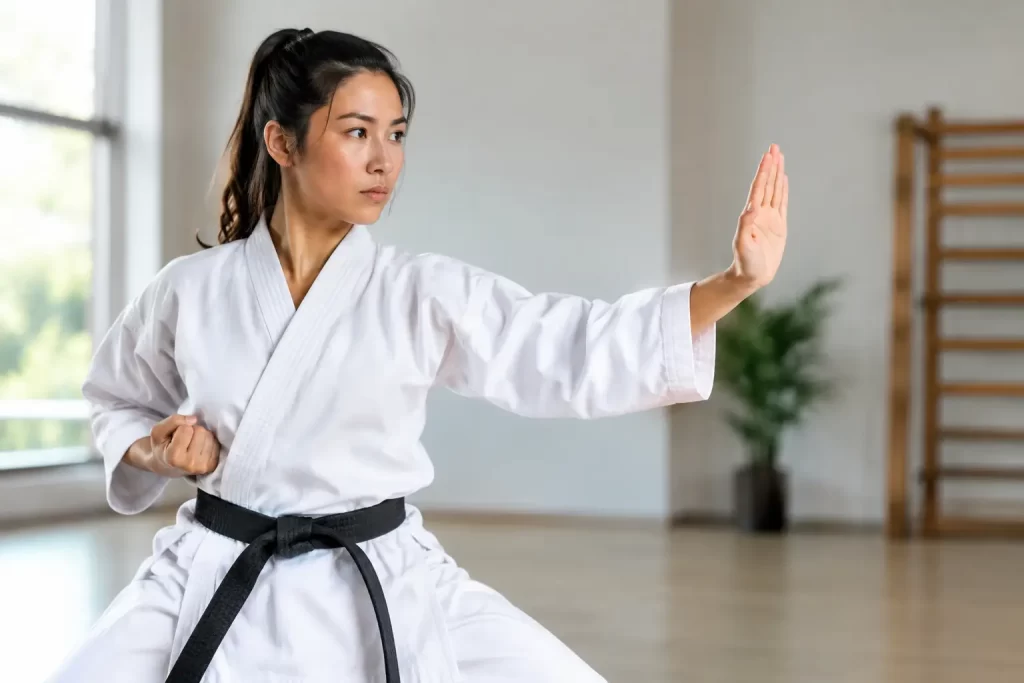
The benefits of martial arts discipline show up long after class ends. They appear when you follow through on a hard workout, stay calm during a stressful day, speak up with confidence, or help your child handle a challenge without giving up. Training teaches more than punches, kicks, takedowns, and submissions. It gives people a repeatable way to practice effort, self-control, and progress.
At Champions BJJ, discipline is not about being yelled at or trying to be perfect. It is built through clear coaching, consistent attendance, respect for training partners, and the decision to return even when a class feels difficult. That approach works for complete beginners, experienced athletes, kids, and busy adults alike.
What Martial Arts Discipline Really Means
Discipline is often confused with motivation. Motivation is useful, but it comes and goes. Discipline is what helps you train when work ran late, your energy is low, or the newest technique does not make sense yet.
On the mats, discipline has practical forms. You arrive ready to learn. You listen before drilling. You control your movements so partners can train safely. You tap when needed, reset after a mistake, and keep working on fundamentals instead of looking for shortcuts. These small choices build a mindset that carries into school, work, health, and family life.
It also does not mean training at maximum intensity every day. Smart discipline includes rest, recovery, and knowing when to ask an instructor for help. Progress comes from sustainable effort, not burnout.
1. It Builds Consistency That Transfers Everywhere
Most goals are not achieved through one big effort. They are achieved through small actions repeated over time. Martial arts makes that lesson real because skill is earned class by class. You may not notice a major difference after one week, but regular training changes your conditioning, timing, technique, and confidence.
For adults, that rhythm can create a reliable break from the demands of work and home. For kids, it teaches that improvement is connected to practice, not just natural talent. Showing up becomes a promise you keep to yourself.
Consistency can be challenging for families with packed schedules. Two classes a week done regularly will usually create more progress than an intense start followed by a long absence. The right routine is the one you can maintain.
2. It Develops Self-Control Under Pressure
Combat sports are controlled environments for learning how to respond when things get uncomfortable. During sparring, pad work, or Brazilian Jiu-Jitsu rounds, students have to think while tired, manage frustration, and make safe decisions quickly.
That is where discipline becomes visible. Instead of reacting recklessly, a student learns to breathe, protect themselves, listen to coaching, and choose the next useful action. A hard round may reveal weaknesses, but it also provides immediate feedback without defining the person.
This is especially valuable for children. A child who practices pausing, listening, and resetting after a difficult moment has a better foundation for handling conflict at school or disappointment at home. Martial arts does not promise that kids will never face stress. It gives them healthier tools for meeting it.
3. Discipline Creates Real Self-Confidence
Confidence built only on compliments can disappear quickly. Confidence earned through effort is different. It comes from knowing you have done difficult things before, learned from mistakes, and kept going when progress was slow.
A beginner who was nervous to take a first class may eventually complete a challenging conditioning round, learn to defend a position, or help another new student feel welcome. Those are meaningful wins. They do not require becoming a professional fighter.
For people interested in self-defense, disciplined practice matters more than flashy techniques. Calm movement, awareness, distance management, and the ability to act with purpose are developed through repetition. The goal is not to look tough. It is to become more capable and composed.
4. It Makes Fitness Goals More Sustainable
Many people stop exercising because workouts feel repetitive or disconnected from a bigger purpose. Martial arts training gives conditioning a job to do. Cardio helps you last through rounds. Strength helps you control your body and move with power. Mobility supports safer technique. Each class offers a reason to improve.
That can be a strong fit for someone pursuing weight loss, better energy, or overall health. Kickboxing and boxing can challenge endurance and coordination, while grappling builds strength, balance, and body awareness. Mixed martial arts brings several skills together for a demanding full-body workout.
Results still depend on attendance, recovery, nutrition, and personal starting point. Martial arts is not a quick fix. It is a training habit that can make healthier choices easier to sustain because you feel the difference those choices make in class.
5. It Teaches Respect Without Taking Away Individuality
Respect in a martial arts academy is practical. Students respect instructors by paying attention, respect partners by training safely, and respect the space by keeping it clean and organized. In return, they deserve coaching that is clear, professional, and welcoming.
For children, this structure can be particularly powerful. They learn that rules are not random obstacles. They help everyone train, improve, and stay safe. Kids can be energetic, competitive, and themselves while still learning to take responsibility for their actions.
For adults, respect creates a better room. You can train hard with people from different backgrounds, fitness levels, and experience levels because everyone understands the shared standard: help each other improve and leave ego at the door.
6. It Turns Mistakes Into Useful Feedback
Every martial artist gets swept, misses a combination, loses position, or struggles with a new movement. Discipline changes the meaning of those moments. Rather than seeing a mistake as proof that you are not good enough, you learn to ask what happened and what to try next.
This process builds resilience. A student who can accept correction without shutting down has an advantage far beyond the gym. They are more prepared to receive feedback at work, adapt after a setback, and keep moving toward a goal.
Good coaching matters here. Beginners need enough challenge to grow without being overwhelmed. Experienced students need details that keep them improving. The best training environment meets people where they are while still expecting honest effort.
7. It Gives Stress a Productive Outlet
Stress has a way of following people home. A tough meeting, a long commute, and a crowded schedule can leave the body tense and the mind scattered. Training creates a focused hour where your attention has somewhere useful to go.
Hitting pads, drilling combinations, practicing escapes, or working through a controlled round requires presence. You cannot spend the whole class replaying the day when you are learning timing and technique. Many students leave feeling physically tired but mentally clearer.
The benefit is not just release. It is regulation. Martial arts teaches you to keep breathing and make decisions while your heart rate is up. Over time, that can help stressful moments feel less overwhelming outside the academy too.
8. It Strengthens Accountability and Community
Personal discipline starts within, but community helps it last. Training partners notice when your technique improves. Coaches can see when you are ready for the next challenge. A supportive academy gives you people who expect you to show up and want to see you succeed.
That accountability should feel encouraging, not intimidating. A family-friendly martial arts community makes room for the first-day beginner, the parent returning to fitness, the child learning confidence, and the athlete preparing for competition. Everyone has a different reason for training, but everyone benefits from a room built on effort and mutual respect.
How to Build Martial Arts Discipline From Your First Class
Start by choosing a realistic schedule and protecting it like any other important appointment. Come prepared to learn rather than expecting instant results. Ask questions, practice fundamentals, and give yourself time to feel comfortable.
For parents, praise effort as much as achievement. Instead of asking only whether your child won a game or earned a stripe, ask what was challenging, what they practiced, and whether they helped a teammate. That keeps the focus on growth.
The strongest discipline is rarely dramatic. It is the quiet decision to return, learn one more detail, support your training partners, and take the next step forward. That is where lasting confidence begins.
