
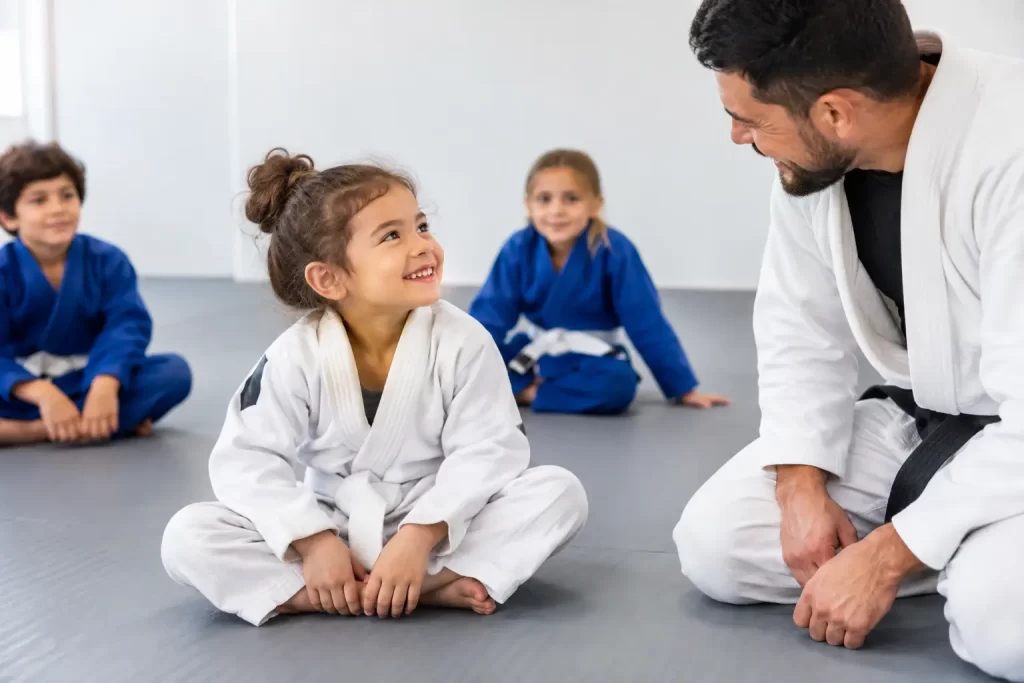
A four-year-old does not need to know how to do a rear naked choke. They need to learn how to listen, move with control, share space, and get back up when something feels hard. That is why the answer to what age starts jiu jitsu is less about finding one magic number and more about matching the student to the right class.
Brazilian Jiu-Jitsu can be a great fit for children, teens, and adults at many stages of life. The best starting point depends on maturity, physical development, goals, and the quality of instruction. A well-run academy meets beginners where they are, then gives them a clear path to build fitness, confidence, discipline, and practical skill.
What Age Starts Jiu Jitsu for Kids?
Many children can begin an age-appropriate jiu jitsu program around ages 4 to 6. At this stage, classes should focus less on complex submissions and more on body awareness, balance, coordination, listening, and respectful behavior. Young students learn through structured games, simple movements, partner drills, and clear routines.
The goal is not to turn a preschooler into a competitor. It is to help them become more comfortable in their body and more capable in everyday situations. A child who learns to follow directions, handle frustration, and work with a partner is developing skills that matter far beyond the mats.
That said, age alone is not the whole answer. One focused four-year-old may be ready for a beginner class, while another child may benefit from waiting a few months. Parents should look at whether their child can participate in a group setting, follow basic safety rules, and separate comfortably for the length of class.
Ages 4 to 6: Building the Foundation
For younger children, the right program feels active, positive, and organized. Instructors should keep the pace moving while reinforcing simple expectations: keep your hands to yourself unless drilling, listen when the coach speaks, and treat training partners with respect.
Classes may include safe falling practice, crawling and movement patterns, positional games, and beginner grappling concepts. Even when the drills look playful, they are teaching valuable habits. Kids learn that effort matters, that practice creates improvement, and that they can stay calm when a challenge does not go their way immediately.
Ages 7 to 12: Learning Skill and Responsibility
By elementary school, many kids are ready for more detailed jiu jitsu instruction. They can begin learning positions, escapes, control, and simple submissions in a closely supervised setting. They also start to understand why technique and patience often matter more than being bigger or stronger.
This is a particularly valuable age for confidence building. School can bring social pressure, bullying concerns, and new expectations. Jiu jitsu gives children a constructive place to test themselves, make mistakes safely, and earn progress through consistent effort. They learn self-defense awareness without being taught to seek conflict.
A good kids program makes the distinction clear: martial arts are for protection, self-control, and respect. The strongest student is not the one looking for a fight. It is the one who can make smart choices under pressure.
Teens Can Start Jiu Jitsu at Any Experience Level
Teenagers often do very well in Brazilian Jiu-Jitsu, even if they have never played a sport before. Some come to train for fitness or self-defense. Others want a break from screens, school stress, or the pressure to fit in. Many simply want an activity that feels real and challenging.
Teens can usually learn technical concepts quickly, but they still need a class culture that values safety and accountability. Training with partners requires humility. Students have to tap when they are caught, use control when they have an advantage, and keep showing up when progress feels slow.
Those lessons can be powerful during the teenage years. Jiu jitsu gives students a reliable outlet for energy and stress while building the confidence that comes from doing hard things consistently. It can also provide a healthy community outside school, where effort and character matter more than social status.
For teens with previous wrestling, football, dance, gymnastics, or other sports experience, BJJ may feel familiar in some ways. But no background is required. Beginners belong in beginner classes, and a quality coach will teach the fundamentals without making new students feel behind.
Is There a Maximum Age to Start Jiu Jitsu?
There is no maximum age to begin. Adults start jiu jitsu in their 20s, 30s, 40s, 50s, and beyond. The right question is not, “Am I too old?” It is, “What do I want from training, and what pace is right for me?”
An adult who wants to compete will train differently from a parent looking to get in shape, manage stress, and learn practical self-defense. Both goals are valid. The best academy helps students train with purpose instead of assuming everyone needs the same intensity.
Adults who have been inactive, are carrying extra weight, or have old injuries should begin gradually and speak openly with their instructor. Jiu jitsu is physically demanding, but it is also adaptable. A skilled coach can help a new student modify rounds, choose appropriate partners, and build fitness over time rather than trying to force a fast transformation.
Consistency beats intensity in the beginning. Training two or three times a week, learning basic movements, and taking recovery seriously will do more for long-term progress than trying to prove something in the first month.
Readiness Matters More Than a Specific Birthday
Whether you are enrolling a child or considering classes for yourself, readiness is the real starting point. A new student does not need to be athletic, flexible, tough, or experienced. They do need to be willing to learn, follow safety guidance, and stay patient through the beginner phase.
For parents, a trial class is often the clearest way to see if the timing is right. Watch how your child responds to the coach, the structure, and the other students. Do they engage with the activities? Can they be redirected? Do they leave feeling proud, even if they were nervous at first?
For adults, pay attention to the environment. You should feel challenged, but not dismissed. A serious jiu jitsu academy has standards, yet beginners should receive clear instruction, appropriate training partners, and the support to ask questions. Hard training and a welcoming culture can exist in the same room.
Choosing the Right First Jiu Jitsu Class
The age label on a class matters, but the coaching matters more. Look for a program that separates students sensibly by age, size, or experience when needed. Children should not be placed into uncontrolled roughhousing, and adult beginners should not be thrown into advanced sparring without fundamentals.
Ask how the academy introduces live training, often called rolling. Rolling is a valuable part of BJJ because it lets students test technique against resistance. But it should be introduced progressively. New students need to understand tapping, partner safety, positional control, and how to train without ego.
You should also look for instructors who teach more than moves. The right coaching team reinforces discipline, respect, cleanliness, and responsibility. At Champions BJJ, that kind of structure helps students train hard while becoming part of a supportive Champions Family.
Starting at the Right Age Means Starting With the Right Mindset
Jiu jitsu is not reserved for naturally athletic kids, experienced fighters, or adults who already feel confident. It is a skill that grows through practice. A shy child can find their voice. A busy parent can rebuild their fitness. A teenager can gain a stronger sense of direction.
If the class is safe, age-appropriate, and led by coaches who know how to teach beginners, the best time to start is often sooner than people think. Take the first class, focus on learning one day at a time, and let confidence grow from every round, every repetition, and every small win.
