
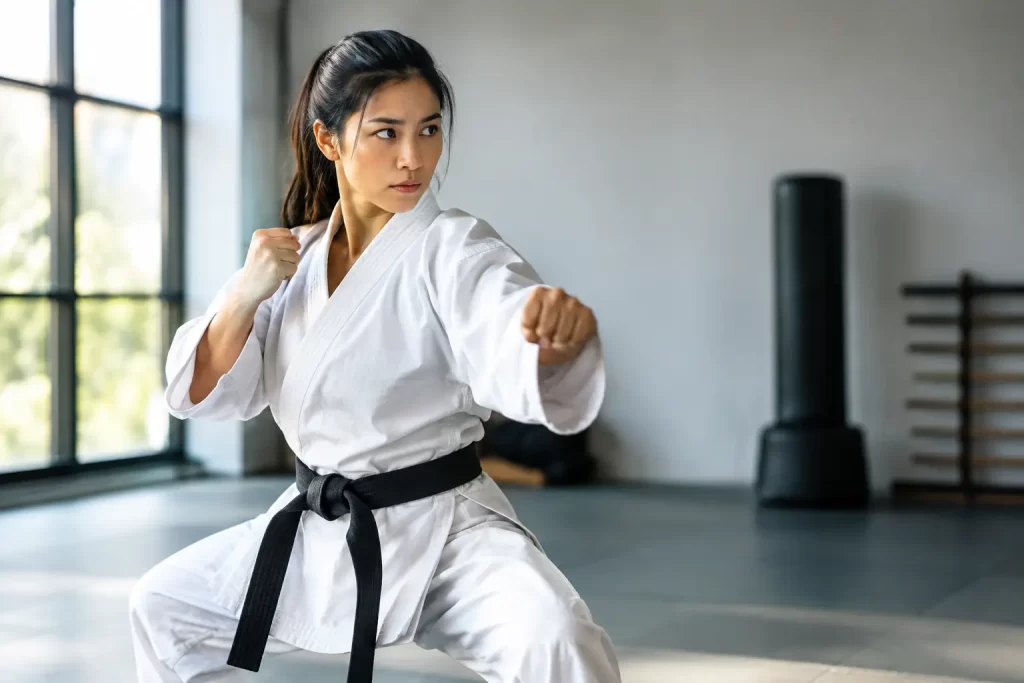
The first class can feel like the hardest step. You may wonder whether you are fit enough, coordinated enough, or too busy to start. The truth is that why train martial arts is less about becoming a fighter and more about becoming more capable in your everyday life. You show up, learn one skill at a time, and find out what consistent effort can change.
For some people, that change starts with getting in better shape. For others, it is learning self-defense, managing stress after a long workday, or giving a child a place to build confidence. Martial arts training brings those goals together in a way that a treadmill or a typical workout routine often cannot.
Why Train Martial Arts for Real-World Confidence
Confidence is not pretending you are never nervous. It is knowing you can stay calm, think clearly, and take action when something feels difficult. Martial arts builds that kind of confidence through repetition. You learn a stance, a defensive movement, a takedown, an escape, or a combination. Then you practice it until it begins to feel familiar.
Brazilian Jiu-Jitsu, boxing, kickboxing, and mixed martial arts each challenge you differently. In Jiu-Jitsu, you learn how technique and position can help a smaller person manage a stronger opponent. In boxing and kickboxing, you develop timing, footwork, distance, and defensive awareness. MMA brings multiple skills together while teaching you how to stay composed as situations change.
That does not mean every student needs to compete or spar hard. Training can be adjusted to your experience, goals, and comfort level. A beginner may spend the first weeks learning fundamentals and building movement patterns. An experienced athlete may want the pressure and detail of competition preparation. Both students can gain confidence because both are progressing with purpose.
Get Fit Without Dreading the Workout
Many people join a gym with good intentions, then lose interest in repeating the same routine alone. Martial arts gives fitness a job to do. You are not just doing drills to burn calories. You are improving your balance for a sweep, your conditioning for another round, and your strength for better control.
Classes can improve cardiovascular endurance, mobility, coordination, core strength, and total-body conditioning. You will work hard, but the session moves quickly because your attention stays on learning. There is always a new detail to sharpen or a training partner helping you solve a problem.
Weight loss can be a meaningful goal, and martial arts can support it by making regular exercise more engaging. Still, sustainable results depend on more than intense classes. Sleep, nutrition, recovery, and a routine you can maintain all matter. The best program is not the one that exhausts you for two weeks. It is the one you are ready to return to week after week.
Learn Self-Defense With Control and Awareness
Practical self-defense is one of the strongest reasons to train, but it is often misunderstood. Good self-defense is not about looking for a fight or relying on a single flashy technique. It starts with awareness, boundaries, distance management, and the ability to make smart decisions under pressure.
Training gives you exposure to realistic resistance in a controlled environment. You learn what it feels like when someone is trying to hold you down, close distance, or disrupt your balance. You also learn that control matters. The goal is to protect yourself, create an opportunity to leave, and get to safety whenever possible.
For parents, this is especially valuable. Children who train can develop better posture, stronger boundaries, and the confidence to speak up. Martial arts can support bullying prevention by teaching kids to stay aware, use their voice, and avoid unnecessary conflict. Physical techniques are part of the lesson, but discipline and judgment matter just as much.
Trade Stress for Focus
A demanding job, family responsibilities, traffic, and constant notifications can leave your mind running long after the day ends. Martial arts gives that energy somewhere useful to go. During class, you cannot fully focus on tomorrow’s meeting or the pile of laundry at home. You have to pay attention to your breathing, your movement, and the person in front of you.
That focused effort can be a powerful reset. You leave tired in a good way, with a clearer head and a sense that you did something for yourself. Over time, the discipline of training can carry into daily life. You may become more patient in stressful moments, more comfortable with challenges, and more willing to work through discomfort instead of quitting early.
Training is not a replacement for professional mental health care when you need it. It can, however, be a healthy part of a larger routine for managing stress, building structure, and feeling connected to other people.
Build Discipline That Shows Up Off the Mats
Motivation gets you started. Discipline is what brings you back when you are tired, busy, or not seeing immediate results. Martial arts teaches this lesson in a direct way. You do not earn a new skill by wanting it. You earn it through practice, correction, and patience.
Kids benefit from this structure because progress is visible. They learn to listen, follow directions, respect training partners, and handle both wins and mistakes. Those habits can support better focus at school and more confidence in unfamiliar situations.
Adults need the same reminders. A difficult class can humble you, especially at the beginning. That is part of the value. You learn that being new at something is not failure. It is the starting point for growth. Every class attended becomes evidence that you can keep a commitment to yourself.
Progress Is Personal
Martial arts is not a race against the most advanced person in the room. Some students want to compete. Some want to feel safer. Some want to be active with their children or regain energy after years away from exercise. Your reasons can change over time, and that is okay.
What matters is having clear coaching, a safe environment, and goals that fit your life. If you can train twice a week consistently, that is better than planning six sessions and disappearing after the first month. Steady progress builds stronger skills than short bursts of intensity.
Find a Community That Holds You Accountable
The right academy is more than a place to exercise. It is a room full of people who understand that improvement takes work. Training partners challenge you, encourage you, and help you learn. Over time, the faces that were unfamiliar on your first day become people who notice when you have made progress and welcome you back when life gets busy.
That community matters for families, too. Parents want a place where their children are coached with care and held to a high standard. Adults want serious instruction without feeling judged for being beginners. At Champions BJJ, the goal is to create that balance: real combat-sports training, experienced coaching, and a Champions Family culture where people can work hard together.
Start Before You Feel Ready
You do not need to get in shape before starting martial arts. You do not need previous experience, expensive gear, or a competitive personality. You only need the willingness to try a class and learn.
Expect the first day to feel new. You may be challenged. You may laugh when your coordination does not match what your brain planned. That is normal. A good instructor will help you learn safely, and a good team will remember what it felt like to be new.
If you are deciding why train martial arts now, choose a reason that matters to you: stronger health, practical self-defense, a calmer mind, a more confident child, or a community that keeps you moving forward. Then take the first class. The skills will build one rep, one round, and one better day at a time.
