
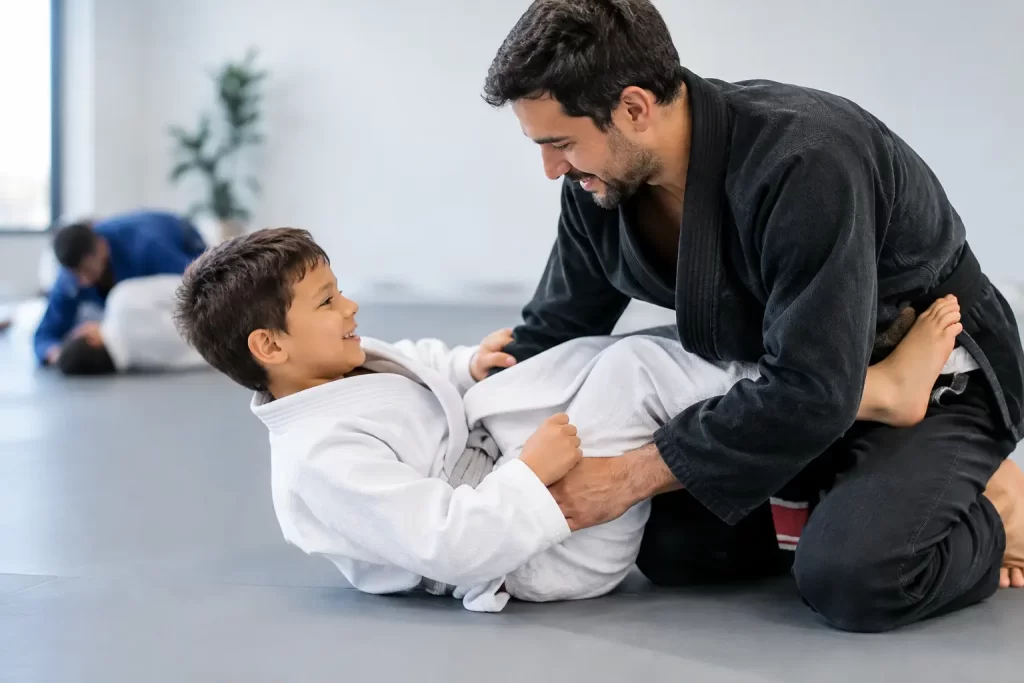
A first BJJ class can look intense from the outside. People are grappling, moving quickly, and practicing positions most beginners have never seen before. So, is BJJ safe? For most adults and kids, Brazilian Jiu-Jitsu can be a safe, rewarding activity when it is taught in a structured academy, practiced with control, and supported by good decisions from both coaches and students.
BJJ is still a contact sport. That means there is always some risk, just as there is with football, basketball, running, weightlifting, or any activity that asks your body to work hard. The goal is not to pretend injuries never happen. The goal is to train in an environment where safety comes first, technique is valued over ego, and every student learns how to protect themselves and their training partners.
Is BJJ Safe for Beginners?
Yes, beginners can train BJJ safely, especially when they start in a true beginner-friendly program. A quality academy does not throw a new student into a hard sparring round and hope they figure it out. Coaches teach positions, movement, escapes, and basic submissions step by step. You learn how to fall, how to use your body efficiently, and when to stop.
The biggest adjustment for a new student is understanding that Brazilian Jiu-Jitsu is not about muscling through every situation. Trying to overpower a partner is exhausting and can create unnecessary risk. Good instruction teaches you to stay calm, use controlled pressure, and let technique do the work.
Most beginners spend their early classes learning at a manageable pace. Drilling gives you time to understand a movement before adding resistance. When it is time to spar, also called rolling, experienced coaches can pair you with partners who know how to work safely with newer students. You are not expected to perform like a competitor on day one.
What Makes a BJJ Academy Safer?
Safety is built into the culture of the gym, not just the rules posted on a wall. The right training environment makes a major difference in how comfortable and confident a student feels on the mat.
First, coaching matters. Instructors should be present, attentive, and clear about what students are practicing. They should correct unsafe habits early, explain how to apply submissions with control, and create a class structure that fits the experience level in the room. A serious academy teaches real martial arts while making sure people have the foundation to train responsibly.
Second, training partners matter. BJJ is cooperative even when you are resisting each other. Your partner needs to know how to match intensity, avoid wild movements, and respect a tap immediately. In a healthy gym culture, students understand that nobody gets stronger by hurting the person who came to help them train.
Third, cleanliness matters. Mats should be cleaned regularly, and students should arrive with clean uniforms, trimmed nails, and good personal hygiene. Skin infections are avoidable more often than people realize when an academy has clear standards and students take them seriously.
Finally, the best academies encourage communication. If you have an old shoulder injury, a sore knee, are returning after pregnancy, or simply feel nervous about a position, tell your instructor. Modifications are part of smart training. There is no prize for ignoring pain or pushing through a situation your body is not ready for.
Understanding the Real Injury Risk
Like any physical sport, BJJ comes with common aches and occasional injuries. Fingers, wrists, shoulders, knees, and necks can take stress during grappling. Minor bruises, muscle soreness, and mat burn can happen, especially while your body adapts to a new activity.
More significant injuries are less likely when training is controlled, but they are possible. That is why tapping is one of the most important safety tools in Brazilian Jiu-Jitsu. A tap means stop. It is not weakness, quitting, or losing. It is a smart signal that protects your joints and lets you return to training another day.
The same rule applies to your partner. When someone taps, you release immediately. When a coach says stop, you stop. These habits are part of the discipline that makes BJJ different from a street fight or an uncontrolled workout.
Intensity also matters. A person preparing for a tournament may choose tougher rounds than a working parent training twice a week for fitness and self-defense. Both can train in the same academy, but their approach should not be identical. Your goals, experience, age, recovery, and health history should guide how hard you train.
How to Train Safely From Your First Class
You do not need to arrive in perfect shape to begin BJJ. You do need to be willing to learn. A few simple habits can make your experience much safer and more enjoyable.
Listen closely during instruction, especially when a coach explains where to place your hands, how to protect your neck, or how to apply a technique. Small details often prevent big mistakes. If you do not understand something, ask. Questions are expected in a beginner class.
Choose control over speed. Fast, uncontrolled movement is where many beginners get into awkward positions. Move with purpose, but give yourself time to recognize what is happening. As your awareness improves, speed will come naturally.
Tap early when you are caught in a submission or feel pressure in a joint. You can tap with your hand, tap your partner, or say tap out loud if your hands are unavailable. Do not wait to see how long you can endure it. BJJ is a long-term practice, and protecting your body keeps you on the mat.
Respect recovery, too. Getting in great shape does not mean training through sharp pain, illness, or exhaustion every day. Sleep, hydration, mobility work, and rest all support better performance. If something feels wrong, take a break and get appropriate medical guidance before returning to hard training.
Is BJJ Safe for Kids?
For children, BJJ can be an excellent outlet for energy while building confidence, body awareness, discipline, and respect. But kids need age-appropriate instruction. A safe kids program is not an adult class with smaller uniforms. It uses games, movement drills, clear boundaries, and techniques designed for a child’s stage of development.
A good coach teaches children that martial arts skills come with responsibility. They learn that training is for the mat, not for starting fights at school. They also learn how to handle pressure, follow directions, work with classmates, and keep trying when a skill is difficult.
Parents should look for a program where coaches actively supervise partner work and create a positive atmosphere. Children should never feel pressured to train through pain or fear. They should be encouraged to speak up, ask for help, and treat teammates with respect.
For many kids, the social side is just as valuable as the physical training. They become part of a team where effort is noticed, progress is earned, and confidence grows through consistent practice. That can be especially meaningful for children who are shy, dealing with bullying, or looking for a healthier source of structure after school.
Choosing the Right Place to Start
If you are deciding whether BJJ is right for you or your child, visit the academy before making assumptions based on videos online. Watch how instructors interact with new students. Notice whether advanced students help beginners. Pay attention to the pace of class and whether the room feels focused, clean, and welcoming.
At Champions BJJ, students are taught to train hard with purpose, not recklessly. Whether your goal is fitness, self-defense, stress relief, competition, or helping your child build confidence, the right foundation makes all the difference.
The safest first step is often the simplest: try a class, communicate openly with the coach, and give yourself permission to learn at your own pace. You do not have to be fearless to begin. You just need a place where disciplined training and supportive people help you become stronger, one class at a time.
