
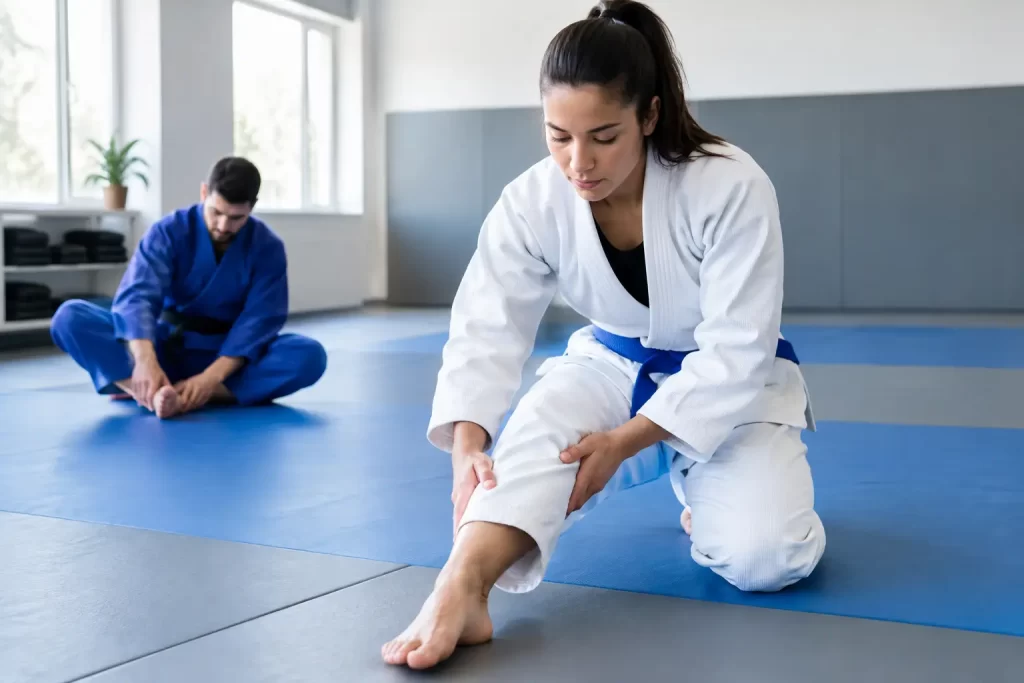
A great training session should leave you tired, sharper, and proud of the work – not sidelined by a preventable injury. Learning how to prevent mat injuries starts before the first round: arrive prepared, listen to coaching, and train with control. Whether you are brand new to Brazilian Jiu-Jitsu, bringing your child to class, or building your striking skills, safe habits help you stay consistent long enough to see real progress.
Martial arts are physical. Bumps, soreness, and the occasional minor scrape can happen when people are learning to move, grapple, and spar. The goal is not to train timidly. The goal is to build awareness, make smart decisions, and train in an academy culture where partners look out for one another.
How to Prevent Mat Injuries Before Class Starts
Most avoidable injuries begin with a rushed warm-up, poor hygiene, or trying to train through a problem that needs attention. Give yourself a few extra minutes before class. Trim your fingernails and toenails, remove jewelry, and cover any small cuts with a secure bandage. These simple steps protect both you and the people training beside you.
Clean gear matters just as much. A sweaty uniform, rash guard, gloves, or shin guards left in a gym bag can collect bacteria and create unpleasant odors. More importantly, skin infections spread quickly in close-contact sports. Wear clean training clothes for every class, wash your gear after use, and shower as soon as practical after training.
Do not step onto the mat with an unexplained rash, open wound, fever, or contagious illness. Let an instructor know if you are unsure. Taking a day off when needed is not a lack of discipline. It is a responsible choice that protects your training partners and helps keep the whole academy healthy.
Warm Up for the Work You Are About to Do
A proper warm-up is more than a few quick stretches. It prepares your joints, muscles, balance, and reaction time for the movements ahead. Grappling asks a lot from the neck, shoulders, hips, knees, and ankles. Boxing and kickboxing demand stable feet, mobile hips, and shoulders that can throw and defend repeatedly.
Start by raising your body temperature with the class warm-up, then move through controlled mobility work. Hip rotations, shoulder circles, light sprawls, technical stand-ups, and easy movement drills are useful because they resemble the skills you will use. Save long, intense static stretching for after class or a separate mobility session. Before training, you want your body awake and ready to move, not overly relaxed.
If an area feels tight, tell your coach before the round begins. A good instructor can help you modify drills, reduce intensity, or choose positions that let you train without making a small issue worse.
Train With Control, Not Ego
The fastest way to create a bad round is to treat every round like a championship fight. Intensity has a place in martial arts, but it needs structure. Beginners especially benefit from technical rounds where the focus is learning posture, distance, balance, defense, and timing rather than winning an exchange.
Choose training partners wisely. Size, experience, and temperament all matter. A larger or more advanced teammate can be an excellent partner when they know how to control their strength and help you learn. A hard-charging partner who ignores taps, throws uncontrolled strikes, or turns every drill into a contest is not the right match for every round.
Speak up early. You can say you are new, nursing a sore knee, returning after time off, or looking for a light technical round. Clear communication prevents misunderstandings and gives your partner the information needed to train responsibly.
Tap Early and Respect Every Tap
In Brazilian Jiu-Jitsu, tapping is a skill, not a failure. Tap with your hand, tap your partner, or clearly say “tap” when your hands are trapped. Release a submission as soon as your partner taps, even if you think they tapped too soon or you did not hear it clearly at first.
Do not wait for sharp pain, a loud pop, or panic. Joint locks and chokes can move from manageable to dangerous quickly, especially when fatigue affects your judgment. Tapping early means you can reset, learn what happened, and return for the next round.
The same respect applies in striking classes. Keep sparring light when the assignment calls for light sparring. Do not throw harder shots because you got tagged. Control protects your brain, your training partners, and your ability to keep showing up week after week.
Use the Right Equipment and Keep It in Good Shape
Equipment cannot replace good coaching and controlled training, but it reduces risk when used correctly. Mouthguards are especially valuable for sparring and drills with contact. Boxing gloves, hand wraps, shin guards, headgear when required, and properly fitted protective equipment should match the class and the level of contact.
A mouthguard should fit securely enough that you can breathe and communicate without constantly adjusting it. Hand wraps should support the wrist and knuckles without cutting off circulation. Gloves with worn padding, cracked surfaces, or a bad smell that will not wash out should be replaced. Old equipment can protect less effectively and is harder to keep sanitary.
For children, gear should fit now, not “grow into.” Oversized gloves can make proper technique harder to learn, while loose shin guards slide around and create distractions. Ask the coaching team what is appropriate for the specific program rather than buying every piece of gear at once.
Build Safe Movement Into Your Technique
Good technique is one of the best forms of injury prevention. When you learn to fall correctly, keep your elbows and knees in safe alignment, and use frames instead of muscling through bad positions, you reduce unnecessary strain. Skill lets you apply effort more efficiently.
Avoid posting an arm straight out when you are being taken down or swept. In grappling, a planted arm can place the wrist, elbow, and shoulder in a vulnerable position. Learn breakfalls, keep awareness of where your limbs are, and let your coach correct habits before they become automatic.
In striking, keep your wrists straight behind the punch, maintain your stance, and return to guard after every combination. Wild swings and poor balance may feel powerful for a second, but they leave you exposed and can strain your shoulders, hands, and knees. Start slowly enough to perform the movement well, then add speed and power as your mechanics improve.
Know the Difference Between Normal Soreness and a Warning Sign
Training can create normal muscle soreness, especially when you are new or returning after a break. That feeling is usually broad, dull, and improves over a day or two. Sharp pain, swelling, numbness, weakness, instability, a headache after head contact, or pain that changes the way you walk are different signals.
Do not try to prove toughness by hiding an injury. Tell your coach, stop the activity that caused pain, and get medical guidance when symptoms are severe, persistent, or concerning. Returning too soon can turn a manageable issue into a longer setback.
A gradual return is often smarter than jumping back into full rounds. You may be able to drill at lower intensity, work on movement, or focus on a different part of your game while recovering. The right approach depends on the injury and the advice of a qualified medical professional.
Help Create a Safer Mat Culture
Every student contributes to the room. Be aware of nearby pairs while rolling or sparring, and pause if you are about to collide with someone. Reset in the center when needed. Keep water bottles, bags, and shoes off the training area so nobody trips during drills.
Parents can reinforce the same habits with kids: clean gear, trimmed nails, honest communication about pain, and respect for instructors and partners. Children learn confidence when they understand that being careful is part of being a good teammate, not something that makes them less tough.
At Champions BJJ, students train hard, but nobody has to earn their place by taking unnecessary risks. Beginners, experienced athletes, kids, and parents all benefit from a room where people can ask questions, tap without hesitation, and improve together.
The best injury-prevention plan is not complicated. Show up clean and prepared, warm up with purpose, use control, and communicate before a small concern becomes a major problem. Those habits protect your body, build trust with your teammates, and keep you on the mat where confidence is earned one class at a time.
