
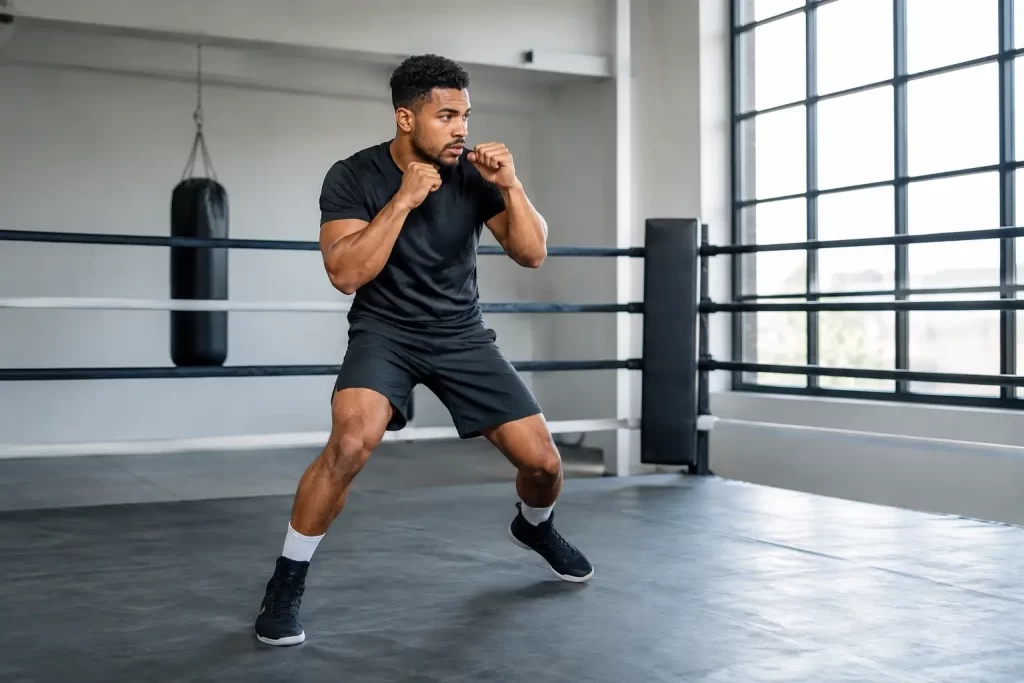
A heavy punch can change a round, but good footwork controls everything that happens before it. If you want to know how to improve boxing footwork, start by thinking beyond speed. The goal is to stay balanced, create better angles, protect yourself when you move, and put yourself in position to throw with purpose.
For beginners, footwork can feel awkward because there is a lot to manage at once: your stance, guard, distance, breathing, and your opponent’s movement. That is normal. With consistent practice and patient coaching, those small steps become a major source of confidence in the ring and in any boxing class.
How to Improve Boxing Footwork Without Losing Balance
The foundation is your stance. Stand with your feet about shoulder-width apart, knees soft, weight centered, and heels light enough to move without bouncing. If you are an orthodox boxer, your left foot is forward; if you are southpaw, your right foot is forward. Your feet should not be on a tightrope. Keep enough width between them to stay stable when you punch, defend, or change direction.
The key rule is simple: the foot closest to the direction you are moving goes first. Move forward by stepping with the lead foot, then bring the rear foot back to stance. Move backward with the rear foot first, then bring the lead foot back into position. When moving left or right, step with the foot on that side first.
This prevents crossed feet and keeps your base underneath you. Crossing your feet may feel fast for a second, but it leaves you vulnerable to being off-balance, unable to punch, or easy to push backward. Boxing footwork should feel controlled, not rushed.
Avoid taking big steps unless you are deliberately covering distance. Smaller steps let you react quickly. Think of your stance as an elastic band: your feet can stretch slightly as you move, but they should return to a stable distance before you throw combinations.
Build Movement Before You Chase Speed
Many new boxers try to bounce constantly because it looks athletic. Some experienced fighters use a lively rhythm, but that style is not required for everyone. Excessive bouncing burns energy and can make timing harder, especially when you are still learning how to stop, punch, and defend from a balanced position.
Start with a quiet, efficient stance. Let your feet glide across the floor rather than hopping around it. Keep your upper body relaxed and your eyes level. If your head is bobbing dramatically every time you step, you are probably using more energy than necessary.
A good test is whether you can freeze at any moment and throw a clean jab. If you cannot punch without gathering your feet first, slow down. Your movement is getting ahead of your balance.
Footwork also depends on your goal. A taller boxer may use more range and backward movement. A shorter boxer may need to close distance safely, cut angles, and work inside. There is no single style that fits every athlete. The common requirement is that your feet support your strategy instead of creating openings for your opponent.
Boxing Footwork Drills That Produce Real Results
You do not need complicated equipment to make progress. The best drills reinforce stance, balance, and awareness. Practice slowly at first. Clean repetitions build habits that hold up when the pace increases.
Try these drills two or three times each week:
- Line drill: Place tape on the floor or use a court line. Move forward, backward, and side to side while keeping your stance aligned and avoiding crossed feet. Focus on returning to your base after every step.
- Step-and-jab drill: Take one controlled step forward, throw a jab, then reset. Repeat while moving backward and laterally. This teaches you to connect your movement to your offense.
- Circle drill: Use a bag, cone, or training partner as the center point. Circle in both directions without letting your feet come too close together. Add a jab or one-two after every few steps.
- Shadowboxing with boundaries: Mark out a small square on the floor. Shadowbox without stepping outside it. This forces you to make efficient movements rather than taking wide, uncontrolled steps.
- Pivot drill: Start in stance, throw a jab or one-two, then pivot off your lead foot about 45 degrees. Your rear foot should swing around naturally as you turn. Finish balanced, with your hands still up.
Spend quality time on each drill instead of racing through all of them. Five focused minutes of slow, deliberate movement can teach more than twenty minutes of careless bouncing.
Learn to Pivot and Create Angles
A pivot is one of the most useful skills in boxing because it moves you away from the center line while keeping you ready to punch. After you attack, a small pivot can keep you from standing directly in front of your opponent’s return shots.
For an orthodox boxer, a common pivot moves you to your left around the lead foot. Throw a jab or one-two, press lightly into the ball of the lead foot, and turn your body so the rear foot follows around. Do not spin wildly. The movement should be compact enough that you remain ready to defend or punch again.
Practice pivots after combinations on the bag. A heavy bag will not hit back, but it can help you build the habit of leaving at an angle instead of admiring your work directly in front of your target.
Use Shadowboxing to Connect Feet, Hands, and Defense
Shadowboxing is where footwork starts to feel like boxing rather than a separate exercise. Instead of throwing combinations in place, give every round a movement purpose. One round can focus on stepping behind the jab. Another can focus on circling away after every combination. A third can focus on moving backward while maintaining a strong guard.
Picture an opponent with reach, pressure, and different angles. Step out of range, step back in behind your jab, pivot after a right hand, and use your feet when you defend. This kind of intentional shadowboxing improves ring awareness before you add the stress of sparring.
Do not let your hands drop when you focus on your feet. This is a common beginner habit. Good footwork creates opportunities, but your guard and head movement still keep you safe while you are getting there.
Common Footwork Mistakes to Fix Early
The biggest mistake is reaching with the front foot and leaving the rear foot behind. That long stance makes it hard to punch, check your balance, or move away from pressure. Reset your stance before you attack again.
Another mistake is moving only backward. Retreating can create space, but eventually you run out of room. Learn to circle and pivot so you can escape pressure without getting trapped on the ropes or wall.
Some athletes also look down at their feet. You need to feel your stance, not watch it. Keep your eyes forward, chin tucked, and attention on your partner or target. If you need to check your foot position, do it between rounds or during a slow technical drill.
Finally, do not mistake fatigue for bad technique. Footwork is demanding, especially when you are new to boxing or returning to fitness training. If your stance falls apart late in a round, shorten the drill, rest, and repeat with quality. Conditioning matters, but building poor movement patterns while exhausted does not help.
Train With Feedback and Purpose
Footwork improves faster when a coach can see what you cannot. A small issue, such as stepping too narrow or leaning too far forward, may be difficult to notice on your own. Experienced instruction gives you corrections before those habits become harder to change.
At Champions BJJ, boxing training is built to help beginners learn the fundamentals in a supportive environment while giving experienced students room to sharpen their technique. You do not need prior fight experience to develop better movement. You need consistent practice, useful feedback, and training partners who help you improve.
Make footwork part of every session. Use it during warmups, bag work, partner drills, and shadowboxing. The more often you return to your stance with discipline, the more natural your movement becomes.
Your feet set the pace of the exchange. Train them with the same attention you give your punches, and every round will start to feel more controlled, confident, and yours.
