
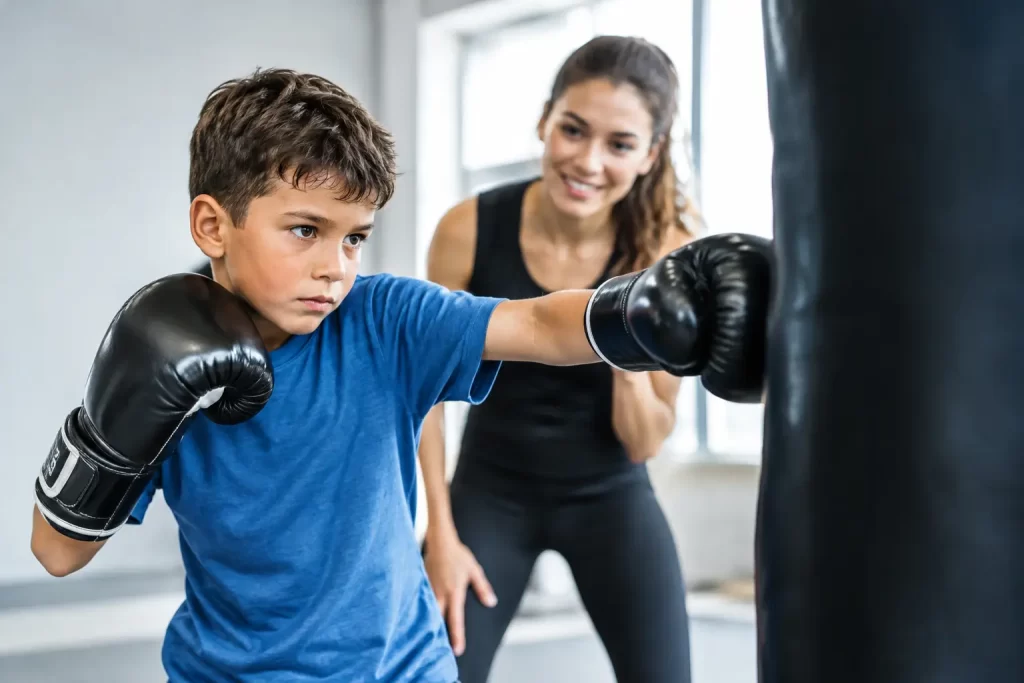
A child who walks into a boxing gym for the first time may be quiet, restless, unsure of their coordination, or carrying the weight of a hard school day. A few months later, that same child may stand taller, listen more closely, and know they can work through a challenge without quitting. That is where the top benefits of youth boxing become clear. It is not about teaching kids to fight. It is about giving them a structured place to build strength, skill, confidence, and character.
For North Houston families, youth boxing can be an outlet that feels productive rather than passive. Kids move, learn real technique, work with coaches, and become part of a team that expects effort and supports progress. The right program meets each student where they are, whether they are brand new to sports or already full of energy and ready for a challenge.
Top Benefits of Youth Boxing Beyond Fitness
Boxing is a full-body sport, but the physical results are only part of the value. Young students learn how to follow instruction, control their movement, respect training partners, and stay composed when something feels difficult. Those habits can carry into school, home, friendships, and other activities.
Stronger bodies through purposeful movement
Youth boxing builds conditioning in a way that keeps kids engaged. Footwork drills, bag work, jump rope, bodyweight exercises, and controlled partner drills develop coordination, balance, endurance, and core strength. Instead of simply being told to exercise, kids have a reason to move well: every stance, punch, and step has a purpose.
This matters for children who do not enjoy traditional team sports. Boxing gives them individual goals while still surrounding them with teammates. A child does not have to be the fastest runner or the biggest athlete to improve. Consistent practice creates measurable wins, such as finishing another round, maintaining better form, or learning a new combination.
Training should always be age-appropriate. Quality youth programs prioritize technique, conditioning, control, and safety rather than hard contact. Younger students do not need to spar to gain the fitness and confidence benefits of boxing.
Better coordination, focus, and body awareness
Throwing a punch correctly requires more thought than it appears to. Kids must position their feet, keep their hands up, rotate with control, watch a target, and return to a balanced stance. Combining those movements teaches body awareness and hand-eye coordination while challenging the brain as much as the body.
That focus can be especially helpful for kids who have trouble sitting still or switching off after school. Boxing gives their energy a clear direction. They are not asked to be motionless. They are asked to pay attention, make decisions, and use their energy with discipline.
The goal is not perfection on day one. The goal is learning to listen, try again, and make small corrections. Over time, students begin to understand that focus is a skill they can practice.
Discipline That Feels Earned
Parents often look for activities that build discipline without turning every afternoon into another lecture. Youth boxing creates natural opportunities for accountability. Students learn to arrive on time, line up, warm up, follow safety rules, and treat coaches and classmates with respect.
There is a direct connection between effort and improvement. If a student skips steps, drops their hands, or loses focus during a drill, they can feel the difference. When they slow down, listen, and put in consistent work, their technique improves. That immediate feedback makes discipline more meaningful than a simple reminder to “try harder.”
At the same time, discipline should not mean fear of making mistakes. Good coaching corrects kids firmly and respectfully. Students should feel challenged, but also safe enough to ask questions and keep working when they get something wrong.
Confidence built through real progress
Confidence is not loudness. For many kids, real confidence is the quiet belief that they can handle something new. Boxing helps create that belief because progress is visible. A student who could not complete a round of drills may later finish several. A child who avoided eye contact may begin greeting teammates, volunteering for demonstrations, or helping a newer student.
Those moments matter because they are earned. Coaches can encourage children, but praise carries more weight when a child knows they put in the work. They learned the footwork. They kept going when their arms got tired. They stayed calm when a drill felt unfamiliar.
This can be valuable for children who struggle with shyness, low self-esteem, or fear of failure. It can also help confident kids learn humility. Everyone starts somewhere, and everyone has something to improve.
A Healthy Way to Handle Stress and Big Emotions
Kids experience stress too. School expectations, busy schedules, social pressure, family changes, and too much screen time can show up as frustration, restlessness, or withdrawal. Boxing offers a healthy release through structured physical activity.
Hitting a heavy bag under a coach’s direction can feel powerful, but the bigger lesson is emotional control. Students learn when to go hard and when to slow down. They learn that strength includes breathing, resetting, and staying respectful even when they feel frustrated.
This does not mean boxing is a cure-all for behavior or emotional challenges. Some children may need extra support from parents, teachers, or healthcare professionals. But regular training can become one reliable part of a healthy routine, giving kids a place to move, focus, and leave with a sense of accomplishment.
Respect, Teamwork, and a Sense of Belonging
Although boxing is often seen as an individual sport, no young boxer improves alone. Kids train beside classmates, hold pads, encourage one another, and learn how to be good partners. They discover that training hard does not require putting someone else down.
A family-friendly gym culture is especially important here. Children should be surrounded by coaches who set clear expectations and teammates who understand that everyone is learning. The strongest student in class still has a responsibility to be respectful. The newest student deserves patience and encouragement.
For families, that community can be just as valuable as the workout. A child who feels like they belong is more likely to keep showing up, keep trying, and carry the lessons of training into everyday life. At Champions BJJ, the goal is to help young students become part of a community that values effort, respect, and steady growth.
Practical Safety Awareness Without Promoting Aggression
Parents sometimes worry that boxing will make a child more aggressive. In a well-run youth program, the opposite should be true. Students learn that combat skills come with responsibility. They practice control, respect boundaries, and understand that training techniques belong in the gym, under supervision.
Boxing can also improve general awareness and self-protection habits. Kids learn to stand with confidence, pay attention to distance, use their voice, and seek help from trusted adults when a situation feels unsafe. These are useful lessons for bullying prevention, but they should be taught alongside a clear message: avoiding conflict and getting help are always smarter than escalating a problem.
If a child has experienced bullying, speak with the coaching team about their needs. The best approach depends on the child, their comfort level, and the situation at school. A supportive program can help rebuild confidence, but it should never promise a simple solution to a complex problem.
Choosing the Right Youth Boxing Program
The benefits depend heavily on the environment. Look for experienced coaches who know how to teach children, clear safety standards, age-appropriate classes, and a culture where respect is non-negotiable. Watch how instructors speak to students. Are corrections clear? Are beginners welcomed? Do kids look engaged and supported?
It also helps to choose a program that gives your child room to grow at their own pace. Some kids are ready to jump into drills on the first day. Others need time to observe, ask questions, and build trust. Neither approach is wrong. Consistency matters more than immediate confidence.
The best first step is often a trial class. Let your child experience the space, meet the coaches, and see that boxing training can be challenging without being intimidating. A good program will help them leave tired, proud, and ready to come back.
