
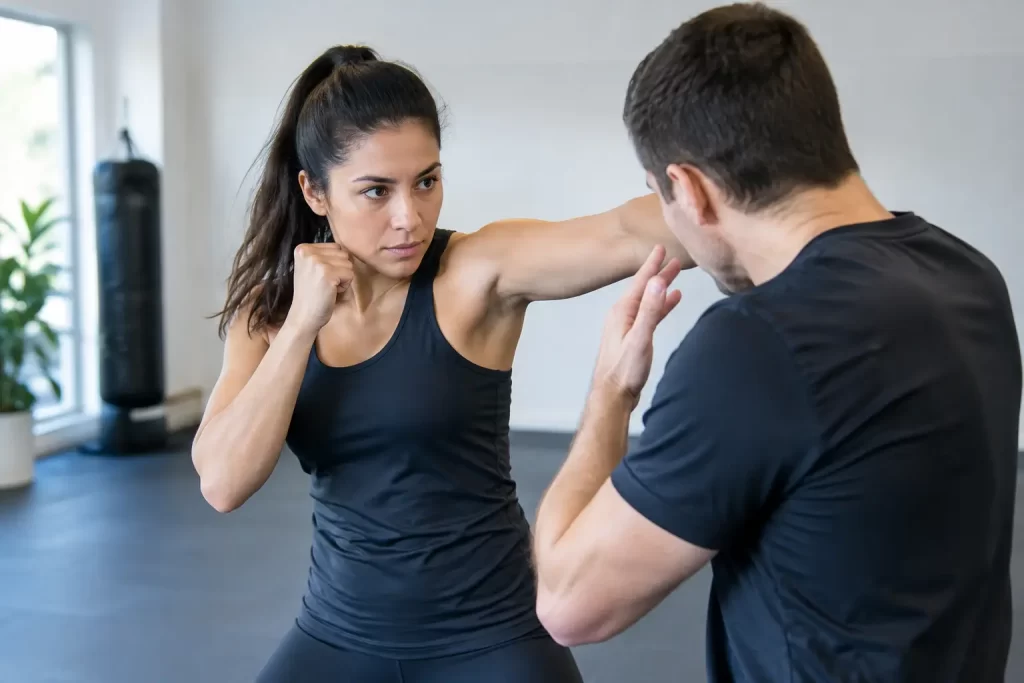
A search for womens self defense Houston training usually comes from a real need: you want to feel more prepared walking to your car, traveling, working late, or moving through daily life. The goal is not to live scared or to become a professional fighter. It is to build calm, practical confidence through skills you have trained enough to use under pressure.
At Champions BJJ, self-defense training is built for real people, including complete beginners who may feel nervous about their first class. You do not need prior martial arts experience, athletic ability, or a fighting background to start. You need a willingness to learn, practice, and show up for yourself.
What Women’s Self-Defense Training Should Teach
Good self-defense is more than a collection of moves. A technique can look easy when someone is standing still and cooperating. Real situations are unpredictable, fast, and stressful. That is why useful training starts with awareness, positioning, decision-making, and repetition.
A strong program helps you recognize when something feels wrong before it becomes physical. It teaches you to create distance, use your voice, move toward safer spaces, and leave whenever leaving is possible. Physical skills matter, but escape is the win. The best outcome is getting home safely, not proving you can overpower someone.
When contact cannot be avoided, training should cover practical responses from common positions. That may include controlling space while standing, breaking grips, defending against strikes, getting back to your feet, and understanding what to do if an attacker grabs or takes you down. Brazilian Jiu-Jitsu is especially valuable here because it gives students tools for controlling distance and escaping from difficult positions without relying only on size or strength.
Why Martial Arts Builds More Lasting Confidence
A single workshop can introduce useful ideas. It may help you think differently about personal safety, and that is a worthwhile start. But confidence grows when your body has time to learn.
Ongoing martial arts classes give you that time. You repeat movements until they become more natural. You train with partners of different sizes and energy levels in a structured setting. You learn how to stay composed when you are tired, surprised, or working through a challenge. That experience changes how you carry yourself outside the gym.
The trade-off is simple: practical ability takes consistency. There is no honest self-defense program that can promise complete readiness in one afternoon. A focused seminar can be helpful, while regular training develops better timing, awareness, fitness, and decision-making over months of practice.
For many women, the benefit reaches far beyond a self-defense scenario. Training can improve strength, conditioning, stress management, and body awareness. It also creates a disciplined outlet after a demanding workday or a long week of caring for everyone else.
What Beginners Can Expect in Class
Walking into a martial arts academy for the first time can feel intimidating, especially if you imagine a room full of advanced fighters. A quality beginner experience should feel organized, respectful, and challenging without making you feel thrown into the deep end.
Classes typically begin with a warm-up and movement drills that prepare your body for training. Your instructor then demonstrates a skill in clear steps, explains why it works, and gives you time to practice with a partner. Coaches should be available to correct details, answer questions, and help you adjust the movement for your current ability level.
You will not be expected to know every term or perform perfectly on day one. Everyone starts somewhere. The right academy creates room for you to learn at your pace while still encouraging you to improve.
Training partners are part of that process. You should be able to communicate your comfort level, ask to go lighter, and take breaks when you need them. Respectful training is not soft training. It is how students practice consistently, reduce unnecessary injuries, and build skills that last.
Choosing Women’s Self-Defense in Houston
Not every class advertised as self-defense offers the same value. Before choosing a program, look beyond a quick promise or a flashy demonstration. Ask how often students practice, whether instructors have legitimate martial arts and coaching experience, and how the academy handles beginners.
The environment matters just as much as the curriculum. You want instructors who take safety seriously and a culture where students support one another. A gym can have excellent fighters, but beginners still need patient coaching, clear structure, and partners who understand that training is a shared responsibility.
Location and schedule matter too. The best program is one you can attend consistently. If you live or work in North Houston, choose a training schedule that fits your real life, whether that means early mornings, evenings, or a few classes each week. Progress comes from regular practice, not from finding a perfect routine that never happens.
It also helps to visit before making a commitment. A free trial class or consultation gives you a chance to meet the coaches, see how students interact, and decide whether the academy feels like a place where you can grow. Trust your instincts. You should leave feeling challenged, welcomed, and motivated to return.
Skills That Matter Before a Fight Starts
Physical techniques are only one part of personal safety. Awareness is a trainable skill, and it begins with paying attention to your surroundings without becoming fearful or distracted.
Keep your phone use limited when walking through parking lots, garages, or unfamiliar areas. Notice exits when you enter a building. If a situation or person makes you uncomfortable, create space early instead of worrying about seeming rude. Your safety is more important than protecting someone else’s feelings.
Your voice can also be a powerful tool. A clear, loud command can draw attention, set a boundary, and disrupt someone who expects you to stay quiet. Simple phrases such as “Stop,” “Back up,” and “I don’t know you” are more useful than complicated speeches. Practice saying them with confidence, not apology.
If you are with friends, agree on a plan before going out. Share rides when possible, check in with one another, and take concerns seriously. Self-defense does not mean handling everything alone. Knowing when to get help is part of being prepared.
Train for Control, Not Fear
People sometimes hesitate to begin martial arts because they worry classes will make them more anxious about danger. In reality, quality training often has the opposite effect. You spend less time imagining worst-case scenarios because you are actively building useful habits, better awareness, and a stronger body.
You also learn humility. No martial art makes a person invincible, and responsible instructors will never suggest otherwise. Factors such as multiple attackers, weapons, unfamiliar surroundings, and surprise can change any situation. That is why avoidance, escape, and calling for help always remain part of the plan.
Still, preparation matters. Feeling physically capable can change how you stand, speak, set boundaries, and respond under stress. It can also remind you that strength is not reserved for people who have trained their whole lives. It is built one class, one drill, and one difficult moment at a time.
A Stronger Routine Starts With One Class
Women’s self-defense training is not about living on guard. It is about moving through life with more options. You learn to recognize risk, make decisions faster, and trust that you can respond if a situation becomes unsafe.
Whether your goal is personal safety, fitness, stress relief, or greater confidence, starting as a beginner is completely normal. Try a class, ask questions, and give yourself permission to learn. The first step onto the mat can become a powerful reminder that you are capable of more than you think.
