
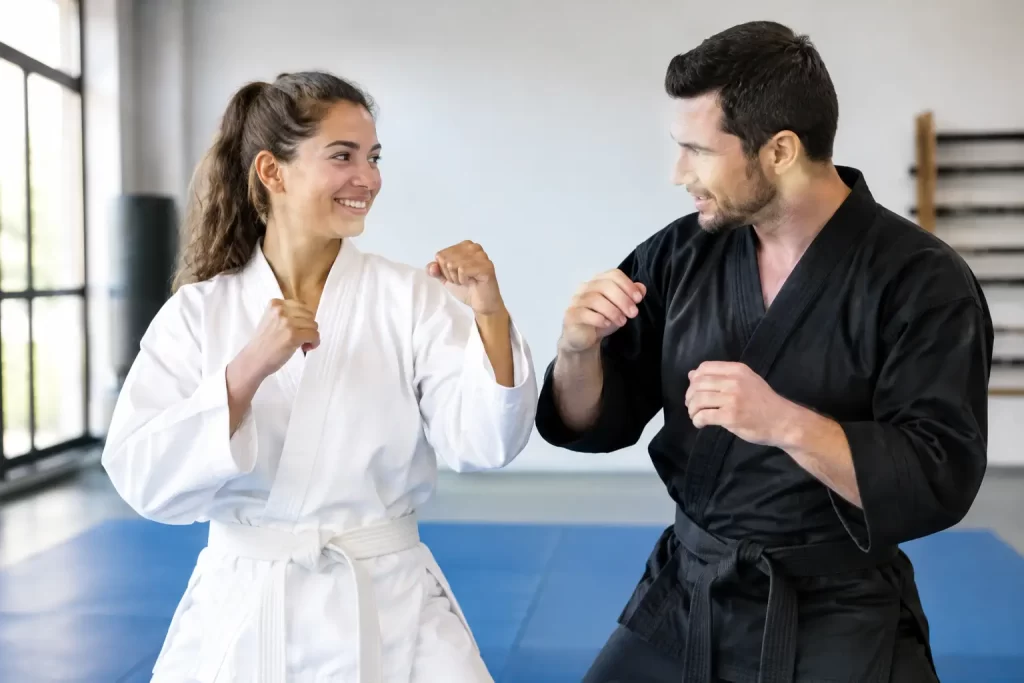
Walking into a martial arts academy for the first time can feel like the hardest round you will face. You may picture experienced athletes throwing fast combinations or rolling with total confidence. The truth is much simpler: every skilled student started as a beginner. This adult beginner martial arts guide will help you take that first step with a clear plan, realistic expectations, and the confidence to keep showing up.
Start With the Result You Want
There is no single best martial art for every adult. The right program depends on what you want from training, what you enjoy, and what will fit into your real life. A working parent training two evenings a week may need something different than a former athlete who wants to compete.
Brazilian Jiu-Jitsu is a strong choice for adults who want practical self-defense, close-range control, and a highly technical challenge. You will learn how to manage distance, escape bad positions, and use leverage rather than relying only on size or strength. It is also a great fit for people who enjoy problem-solving. Every round gives you a new puzzle to work through.
Boxing and kickboxing are excellent if you want a fast-paced workout while developing striking skills, footwork, timing, and conditioning. Hitting pads, learning combinations, and moving with purpose can be one of the best ways to burn off work stress. You do not need to arrive in fighting shape. Training is how you build it.
Mixed martial arts combines striking, clinch work, takedowns, and ground skills. It can be a great path for someone who wants a broader combat-sports experience. For a complete beginner, though, it may make sense to build a base in one or two areas first. A good academy will help you find the program that matches your goals instead of pushing you into a class that is not right for you.
Ask yourself a few honest questions. Are you most motivated by fitness, self-defense, confidence, competition, stress relief, or community? Do you prefer a technical pace or a high-energy workout? Your answer does not have to be permanent. It simply gives you a smart place to begin.
Adult Beginner Martial Arts Guide: What to Expect
Your first class is not an audition. Coaches are not looking for proof that you belong there. They are looking for an opportunity to teach you safely and help you improve.
Most beginner classes start with a warmup designed to prepare your body for movement. You may practice mobility drills, basic bodyweight exercises, footwork, or controlled partner movements. Then the instructor will teach a few core techniques in steps. You will watch, drill the movements with a partner, receive coaching, and repeat.
The goal is not to memorize everything on day one. Focus on posture, balance, breathing, and listening. If you forget a detail, ask. If a movement feels awkward, that is normal. Martial arts ask your body to move in ways your desk job, commute, and daily routine may not.
At a quality academy, experienced students help create a safer learning environment. They remember what it was like to be new, and they can be valuable training partners when they use control and patience. You should never feel pressured to spar hard, roll at full intensity, or prove your toughness. Beginners grow faster when they can learn without fear of making mistakes.
Wear comfortable athletic clothing unless the academy asks you to wear a uniform. Bring water, arrive a few minutes early, and keep your nails trimmed for partner safety. Most importantly, show up ready to learn rather than ready to perform.
Choose an Academy, Not Just a Workout
A martial arts class can give you an excellent workout, but the right academy gives you more than sweat. It gives you coaching, structure, accountability, and people who notice when you improve.
Look for instructors who can explain techniques clearly and adjust their teaching for different experience levels. A coach should be able to challenge serious athletes while making a first-time student feel welcome. That balance matters. High standards and a beginner-friendly culture should exist in the same room.
Pay attention to how people treat each other. Is the training area clean? Do students train with control? Are questions welcomed? Is there a clear emphasis on safety and respect? The strongest gyms are not always the loudest or most intimidating. They are the places where people train hard, take care of their partners, and return week after week.
A free trial class or consultation is useful because it lets you experience the atmosphere for yourself. At Champions BJJ, newcomers can see the coaching, programs, and Champions Family culture before committing. That first visit should leave you feeling challenged, supported, and clear about your next step.
Build Consistency Before You Chase Intensity
Many adults make the same mistake: they train as hard as possible during the first week, get extremely sore, then disappear for a month. Martial arts progress comes from consistency, not a dramatic start.
For most beginners, two or three classes per week is enough to build skill and conditioning without overwhelming your schedule. You will have time to recover, process what you learned, and come back with energy. If you can only train once a week at first, begin there. A routine you can maintain beats a perfect plan you abandon.
Expect the first month to feel unfamiliar. You may get tired faster than you expected. You may have trouble remembering combinations or knowing where to place your hands, feet, or hips. That does not mean you are behind. It means you are learning a new physical language.
Give yourself small, measurable wins. Maybe you attend every scheduled class this month. Maybe you learn to throw a clean jab-cross, escape a basic position, or complete a full round without stopping. Those wins add up quickly. After a few months, movements that once felt confusing will start to feel natural.
Recovery matters too. Drink water, sleep as well as you can, and eat enough to support your activity level. Light walking and mobility work can help with soreness. If something hurts sharply or feels wrong, tell your instructor. Training through normal effort is part of growth. Ignoring a possible injury is not.
Train Smart for Confidence and Self-Defense
Confidence in martial arts is not pretending you are fearless. It is knowing you can stay calm, pay attention, and make better decisions under pressure. That confidence is built through controlled practice.
Self-defense training should include awareness, distance management, verbal boundaries, and the ability to leave a bad situation when possible. Physical techniques matter, but the best outcome is always getting home safely. Good training gives you useful skills without selling false promises.
You also do not need to become aggressive to become capable. In fact, disciplined training often makes people calmer. When you know how to manage your body and understand your limits, you are less likely to panic or react emotionally. The gym becomes a place to release stress constructively, not carry more of it.
If you have concerns about fitness, past injuries, or being older than the average student, speak up early. Training can be adjusted. The pace can be managed. What matters is finding a program where you can work hard safely and make steady progress.
Let the Community Carry You Through the Hard Days
Motivation is helpful, but it is not reliable. Some days you will feel energized and ready to train. Other days, work will run late, your energy will be low, and the couch will make a strong argument. This is where community and routine make the difference.
When people know your name, expect to see you, and celebrate your progress, it becomes easier to return. You may start martial arts for weight loss, self-defense, or a better workout. Over time, many adults stay because they have found supportive training partners and a place that asks more of them in the best way.
Your first class does not require talent, perfect fitness, or a background in sports. It requires a willingness to be new at something worthwhile. Put on the gear, listen closely, train with humility, and come back for the next class. That is how stronger habits, sharper skills, and real confidence begin.
