
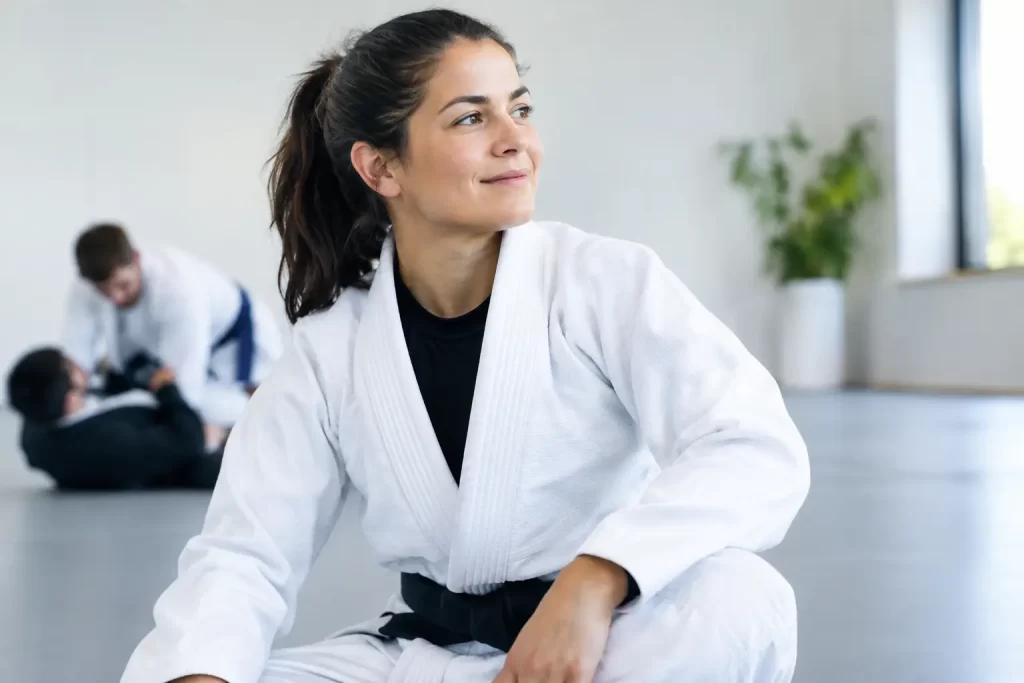
The first few minutes of a jiu jitsu class can feel unfamiliar: bare feet on the mats, new movements to learn, and training partners who may already know their way around a grappling exchange. Then the lesson starts. A coach breaks down one position, one escape, or one control at a time, and the uncertainty begins to turn into focus. That is where real confidence starts – not by pretending something is easy, but by showing up and learning it.
For adults, kids, and families in North Houston, Brazilian Jiu-Jitsu offers more than a hard workout. It is a practical skill, a disciplined outlet, and a place to build strength alongside people who want to see you improve.
What Jiu Jitsu Teaches Beyond the Mats
Jiu jitsu is a grappling martial art built around leverage, positioning, timing, and control. Rather than relying only on size or striking power, students learn how to manage distance, defend themselves, escape difficult positions, and apply techniques with purpose.
That makes it especially valuable for beginners. You do not need to arrive in peak condition or have a background in sports. You start where you are. The early lessons may focus on how to fall safely, maintain balance, move from the ground, and work with a partner respectfully. From there, skills build layer by layer.
The physical results are real. Regular training can improve cardio, mobility, coordination, grip strength, and total-body conditioning. It can also support weight-loss goals because the classes demand consistent movement and engaged effort. Still, the biggest change many students notice is mental. Training gives your attention one place to go. For an hour, the phone, work deadlines, and daily stress take a back seat to the next repetition and the next decision.
That focus carries into everyday life. When you have worked through difficult rounds, learned from mistakes, and returned after a challenging class, pressure feels more manageable. You know you can stay calm, listen, adjust, and keep moving.
Jiu Jitsu for Beginners: Start Before You Feel Ready
Many people delay their first class because they think they need to get in shape first. The truth is that training is how you get in shape. A good academy understands that newcomers need clear instruction, a safe pace, and partners who remember what it felt like to begin.
Beginners should expect to be challenged, but not thrown into the deep end without direction. Quality instruction teaches technique before intensity. Coaches explain why a position works, demonstrate the details, and help students practice in a controlled setting. Sparring, often called rolling, is introduced with guidance and matched to experience level.
There is a difference between hard training and reckless training. Jiu jitsu should be demanding enough to help you grow, while still giving you the structure to train consistently. Tapping is part of that culture. It is not losing. It is a smart signal that keeps training safe and lets both partners learn another day.
For working professionals, that balance matters. You may want a serious workout and practical self-defense skills, but you also need to leave class able to show up for work, family, and the rest of your responsibilities. Smart coaching and good training partners make long-term progress possible.
Why Kids Benefit From Brazilian Jiu-Jitsu
For kids, jiu jitsu creates a productive place to use energy while learning responsibility. They are not simply told to be confident. They earn confidence through small, visible wins: learning a new movement, following directions, helping a teammate, or staying composed when something does not work right away.
That process can be especially meaningful for children who are shy, easily frustrated, or navigating social pressure at school. Brazilian Jiu-Jitsu teaches them to use their voice, respect boundaries, and understand the value of controlled responses. It also gives them a healthy relationship with challenge. They learn that being corrected is not embarrassing. It is how skills improve.
Parents should look for a program that treats discipline as a positive habit, not punishment. The best kids classes combine structure with encouragement. Students should be expected to listen, work hard, and show respect, while also feeling known and supported by their coaches.
Self-defense is part of the value, but it should be taught with judgment. Kids benefit from learning awareness, confidence, and how to create space or get help. The goal is not to encourage fights. It is to help children feel less helpless and more prepared.
A Better Workout for People Who Get Bored at the Gym
A treadmill can improve conditioning, but it cannot teach you how to solve a moving problem with another person. Jiu jitsu does. Every drill asks you to pay attention to balance, pressure, timing, and position. That makes training mentally engaging as well as physically demanding.
No two classes feel exactly alike. One day you may work on escaping from underneath an opponent. Another day may focus on passing the guard, taking the back, or defending a takedown. The variety keeps students involved, while the repetition builds skills they can rely on.
This does not mean jiu jitsu replaces every other form of fitness for every person. Someone focused on maximum strength may still want dedicated lifting. An athlete preparing for a race may need sport-specific running. But for people who want conditioning with a clear purpose, jiu jitsu is hard to beat. You are building endurance, strength, coordination, and composure at the same time.
The Value of a Strong Training Community
A martial arts academy is not just a room with mats. The people in the room shape the experience. The right environment pushes you to improve without making you feel like you have to prove yourself on day one.
At Champions BJJ, students train with people from different backgrounds and fitness levels, including complete beginners, parents, longtime athletes, and competitors. What they share is a willingness to work. That creates accountability. When people know your name and notice your progress, it is easier to keep showing up on the days when motivation is low.
Community also makes the learning process more enjoyable. You will train with partners who help you repeat a technique until it clicks, celebrate a hard-earned promotion, and remind you that everyone has difficult days on the mats. Competition can be part of jiu jitsu, but it is not the only reason to train. For many people, the strongest result is becoming part of a team that expects more from them and supports them along the way.
How to Choose the Right Jiu Jitsu Academy
The nearest academy is not always the best fit. Visit, observe a class, and pay attention to how the coaches interact with new students. Are techniques explained clearly? Do experienced members train responsibly with beginners? Is the atmosphere focused and welcoming?
Ask whether the program has a clear path for your goals. An adult looking for fitness and self-defense may need something different from a competitor preparing for a tournament. A child needs age-appropriate instruction and structure. A family may value class schedules that make consistent attendance realistic.
A free trial class is a useful way to answer those questions firsthand. You can see the coaching style, meet the community, and decide whether the academy feels like a place where you can grow. Feeling nervous before a first class is normal. Leaving with a sense of possibility is a good sign.
The best time to start is not when you are stronger, less busy, or more confident. Start with the version of yourself that is ready to learn. Step onto the mat, take the first lesson seriously, and let the progress build from there.
