
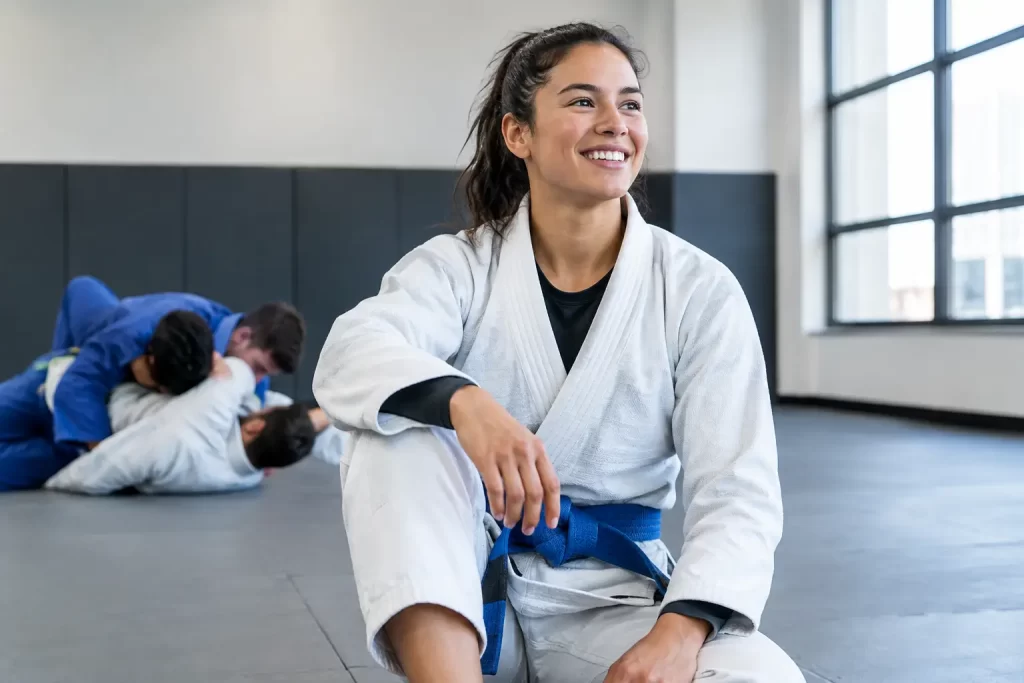
Walking into a new gym can feel like the hardest part of starting Brazilian Jiu-Jitsu. You may wonder whether everyone will be more experienced, whether you need to be in shape first, or whether BJJ Houston classes are only for people who want to compete. The truth is simpler: the right academy meets you where you are and gives you a clear path forward.
Brazilian Jiu-Jitsu is a practical martial art built around leverage, position, timing, and control. You do not need a background in wrestling or combat sports to begin. You need consistent coaching, training partners who want to help you improve, and the willingness to learn one class at a time.
What BJJ Houston Training Should Feel Like
A strong BJJ program should challenge you without making you feel out of place. Training is physical, but it is also technical. A smaller, less athletic person can learn to manage distance, improve position, escape bad situations, and apply control through good mechanics rather than pure strength.
That is one reason Brazilian Jiu-Jitsu works for such a wide range of people. Working professionals use it to break up stressful weeks and build a healthier routine. Parents appreciate its focus on discipline and confidence. Fitness-minded adults enjoy having a real skill to pursue instead of repeating the same workout. Experienced martial artists can keep sharpening their game alongside serious training partners.
The atmosphere matters as much as the curriculum. A room full of people trying to prove something can make beginners quit before they learn the value of the art. A good academy creates accountability without ego. You should feel pushed to improve, safe enough to ask questions, and welcomed by people who remember what it was like to start.
At Champions BJJ, that balance is part of the culture. Students train hard, learn from experienced instructors and competitors, and become part of a Champions Family that supports progress on and off the mats.
Start Where You Are, Not Where You Think You Should Be
Many people delay their first class because they want to lose weight, improve flexibility, or get stronger first. Training is what helps create those changes. You do not need to arrive prepared for Brazilian Jiu-Jitsu. You arrive ready to learn.
Your first few classes may include basic movements, how to fall and get up safely, how to hold a position, and how to work with a partner responsibly. You will hear unfamiliar terms and make plenty of mistakes. That is normal. Progress in BJJ comes from repetition, not from getting everything right on day one.
A quality beginner program should explain the purpose behind each movement. Instead of simply telling you where to put your hands, a coach should help you understand posture, balance, pressure, and the choices available from each position. That foundation makes training safer and gives you skills you can continue building for years.
For some people, the goal is self-defense. For others, it is fitness or stress relief. Those goals can overlap, but they do affect what you should look for. If self-defense is your priority, find instruction that teaches awareness, control, and practical responses under pressure. If fitness is your main goal, look for classes that keep you active while still teaching real technique. If competition interests you, ask whether there are opportunities to train with athletes who understand the demands of tournament preparation.
What to Look for in a North Houston Academy
Not every BJJ gym has the same focus, schedule, or community. The best choice depends on your goals, your location, and whether you can train consistently. A gym with excellent instruction across town may be less useful than a nearby academy where you can realistically attend two or three times a week.
When you visit, pay attention to what happens before and after class. Are new students greeted and shown what to do? Do instructors correct technique in a respectful, specific way? Are advanced students helping newer people learn safely? Those details reveal far more about a gym than a highlight reel ever could.
Look for these signs of a training environment that can support long-term growth:
- Clear classes for beginners, with instruction that does not assume prior experience.
- Coaches who emphasize safety, controlled sparring, and responsible training habits.
- A clean, organized facility with a professional approach to mat hygiene.
- Training partners who match intensity to experience, size, and skill level.
- A schedule that works for adults, children, and busy families.
You should also ask how the academy handles live training, often called rolling. Rolling is one of the most valuable parts of Jiu-Jitsu because it lets you test techniques against resistance. But beginners should not be thrown into hard rounds without guidance. The right environment introduces resistance gradually, teaches students how to tap early, and makes safety a shared responsibility.
The Benefits Go Beyond the Mat
Brazilian Jiu-Jitsu gives you a direct way to measure progress. A technique that felt impossible a month ago starts to make sense. You survive a difficult position more calmly. You complete a round without needing to stop. These small wins build confidence because they are earned through effort.
The physical benefits are real. Regular training can improve conditioning, mobility, coordination, strength, and body composition. It can also provide the kind of active outlet that makes it easier to manage stress after a demanding workday. Still, BJJ is not a shortcut. Results depend on attendance, recovery, nutrition, and how consistently you show up.
The mental side is just as valuable. Jiu-Jitsu asks you to solve problems while tired, stay composed when a position is uncomfortable, and keep working when your first attempt fails. Those habits carry into everyday life. Students often become more patient, more disciplined, and more confident in their ability to handle difficult situations.
For kids, these lessons can be especially powerful. A well-run youth program teaches children to listen, follow directions, respect boundaries, and work through challenges without giving up. It can support healthy confidence without encouraging aggression. The goal is not to turn every child into a fighter. The goal is to help them become more capable, respectful, and resilient.
How Often Should You Train?
For a beginner, two classes per week is a strong starting point. It gives you enough repetition to remember what you are learning while allowing your body time to adjust. If your schedule allows, three classes per week can accelerate progress. More training can be useful, but only if you recover well and keep your enthusiasm high.
Consistency matters more than intensity. Training once in a while and going all-out can leave you sore without building much momentum. A sustainable routine helps you improve technique, develop conditioning, and form relationships with the people you train beside.
Do not compare your beginning to someone else’s middle. The experienced student who moves smoothly has spent many hours learning the same fundamentals you are now starting. Stay focused on your own attendance, effort, and willingness to learn.
A free trial class or consultation is a practical way to see whether an academy feels right. Wear comfortable athletic clothes, arrive with an open mind, and let the coach know you are new. The first step is not proving you belong on the mat. It is giving yourself the chance to grow there.
