
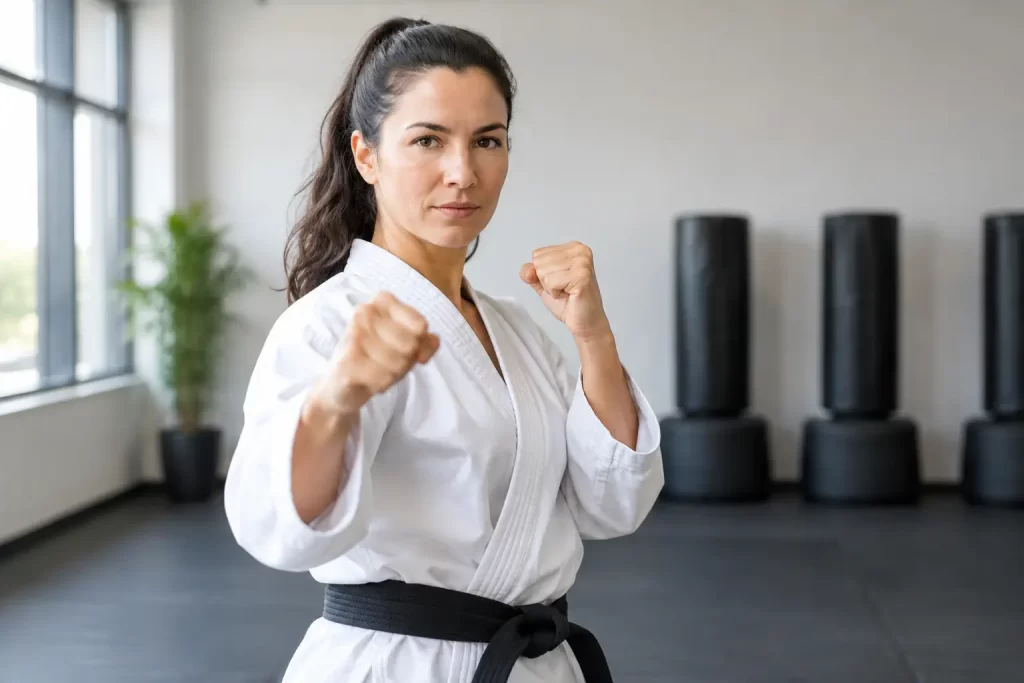
Walking into a martial arts gym for the first time can feel like the hardest part. You may wonder whether everyone else is more athletic, more experienced, or more comfortable with contact. The truth is that martial arts confidence for adults is not something you need before your first class. It is something you build by showing up, learning useful skills, and realizing you can handle more than you thought.
For many adults, confidence has less to do with being loud or fearless and more to do with feeling capable. It is knowing you can stay calm under pressure, move with intention, set a boundary, and keep working when a skill feels difficult. Brazilian Jiu-Jitsu, boxing, kickboxing, and MMA training give you repeated opportunities to practice exactly that.
Why Adults Often Lose Confidence in Their Physical Ability
Adult life can pull people away from challenges that make them feel strong. Long workdays, family responsibilities, stress, and familiar routines can leave little room for learning a new physical skill. Many people start to feel disconnected from their own fitness, especially if they have not trained since school or have spent years putting everyone else first.
A martial arts class changes the environment. You are not expected to know everything on day one. You are expected to listen, practice, and improve. That distinction matters. Instead of comparing yourself to the most advanced person in the room, you can focus on a clear goal: get a little better than you were last week.
There is also a practical benefit that standard workouts do not always provide. Hitting a heavy bag, learning to defend a position, or completing a controlled round with a training partner requires attention. The outside noise has to wait. For working professionals and busy parents, that focused hour can become a reliable outlet for stress.
Martial Arts Confidence for Adults Is Built Through Reps
Confidence does not come from motivational speeches. It comes from evidence. Each class gives you small pieces of proof that you can learn, adapt, and keep going.
At first, the wins may seem simple. You learn how to stand correctly. You remember a combination. You finish a warmup that used to leave you winded. In Jiu-Jitsu, you may escape a position that felt impossible a few weeks earlier. In boxing or kickboxing, you may notice that your footwork is cleaner and your punches are more balanced.
Those repetitions add up. A student who once hesitated to make eye contact or ask a question may eventually help a newer member understand a drill. Someone who doubted they could train consistently may become the person who protects class time on their calendar because they have felt the difference it makes.
This is why structured instruction matters. Random workouts can make you tired, but a well-coached martial arts program gives you a path. You learn fundamental movements, apply them safely, and build on them over time. Progress is not always dramatic from class to class, but it becomes clear when you look back after a few months.
You Do Not Need to Be Aggressive to Train
A common concern is that martial arts will require you to become a different kind of person. It will not. Training can help you become more assertive and composed without making you aggressive.
Real confidence is controlled. It means you do not need to prove yourself in every situation because you know what you are capable of. You learn when to apply pressure, when to create distance, when to stay calm, and when to walk away. That is valuable in self-defense, but it also carries into work conversations, parenting, and everyday interactions.
The Role of Safe, Supportive Training Partners
No one builds confidence alone. Martial arts is individual progress within a team setting. Your training partners challenge you, but they also help you learn. Good partners work at an appropriate pace, respect taps and boundaries, and understand that everybody was new once.
That culture is especially important for adults returning to fitness, people managing old injuries, and complete beginners. Training should be demanding, but it should not feel reckless or humiliating. An experienced instructor can adjust drills, explain technique clearly, and help you train at a level that matches your current condition.
At Champions BJJ, the goal is to create a room where serious training and belonging go together. You can work hard alongside competitors and experienced students without feeling like you have to perform for them. The strongest gym communities are built when people hold each other accountable while making room for every level of experience.
Confidence Grows Faster When You Ask Questions
Adults sometimes put extra pressure on themselves to catch on immediately. That can slow progress. Asking a coach to repeat a detail, telling a partner you are new, or requesting a slower round is not weakness. It is how smart students train.
The more clearly you communicate, the safer and more productive your training becomes. Over time, this habit can change how you carry yourself outside the gym. You get more comfortable speaking up about what you need, accepting feedback, and trying again after a mistake.
What Confidence Looks Like Outside the Gym
The benefits of martial arts are often most noticeable away from the mats or bags. You may stand taller because your posture and conditioning improve. You may have more patience after using training to release stress. You may feel less intimidated by difficult situations because you regularly practice staying present when tired or challenged.
For some adults, the biggest change is consistency. They become someone who follows through. Missing a class does not mean failure, and progress does not require a perfect schedule. But returning to training, even after a busy week, reinforces the idea that your health and growth deserve a place in your life.
Self-defense training can also create a grounded sense of security. It is not about assuming danger is around every corner. It is about understanding distance, awareness, positioning, and basic responses so you feel less helpless. The best outcome is always avoiding conflict, but knowing you have practiced practical skills can reduce fear.
How to Start Without Letting Nerves Win
Start with a beginner-friendly class and give yourself permission to be new. Wear comfortable athletic clothes, arrive a little early, and tell the instructor if you have injuries, limitations, or concerns about contact. You do not need to get in shape before you begin. Training is one way to get in shape.
Choose a program that matches what motivates you. Brazilian Jiu-Jitsu may appeal if you enjoy problem-solving, leverage, and close-range self-defense. Boxing and kickboxing can be a strong fit if you want conditioning, striking fundamentals, and a powerful way to manage stress. MMA can bring different skills together for students who want a broader combat-sports challenge.
Expect some discomfort, especially in the beginning. You may feel awkward learning footwork or tired during drills. That is normal. The key is recognizing the difference between productive challenge and unnecessary pain. Good coaching helps you work hard with sound technique, manageable intensity, and respect for your body.
Avoid making confidence your first measurement of success. Measure attendance, effort, and a few specific skills instead. Can you complete the warmup with better control? Do you remember the sequence from last class? Can you stay relaxed for one more round? Confidence follows those measurable improvements.
Give Yourself Time to Become the Person Who Trains
Martial arts can be humbling. There will be classes where a technique does not click, your cardio feels off, or a more experienced partner exposes a gap in your game. Those moments are not evidence that you do not belong. They are part of the process that makes your progress real.
Adults who stay with training often find that the goal changes. They may have joined to lose weight, learn self-defense, or break out of a routine. They stay because training gives them a stronger relationship with themselves and a community that expects their best. Show up as you are, train with purpose, and let each earned improvement remind you that confidence is a skill you can practice.
