
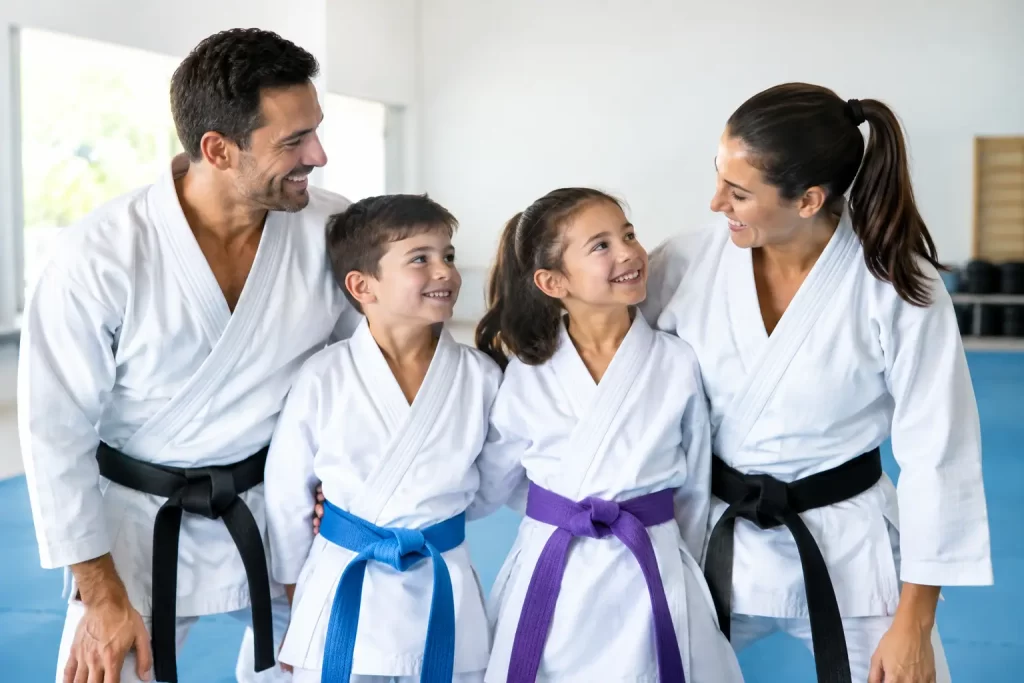
A martial arts academy can look impressive from the outside and still be the wrong place for your family. The good dojo qualities that matter most are not limited to clean mats, championship photos, or a packed class schedule. They show up in how a beginner is welcomed, how instructors teach, how students treat one another, and whether people leave training stronger than when they arrived.
For adults, the right dojo should make it possible to train hard without feeling lost or out of place. For kids, it should build confidence and discipline without creating fear or pressure. Whether your goal is Brazilian Jiu-Jitsu, kickboxing, boxing, MMA, fitness, or practical self-defense, these are the signs of an academy worth your time.
Good Dojo Qualities Start With Safe, Structured Training
A good dojo has clear standards for safety. That means instructors actively supervise drills, teach proper technique before adding speed or resistance, and match training partners responsibly. In contact sports, hard work is part of the process. Unnecessary injuries and reckless behavior should not be.
Watch how the class handles new students. Are beginners given an explanation of what to do, where to stand, and how to work with a partner? Does the instructor correct unsafe movement right away? In Brazilian Jiu-Jitsu, for example, students should learn when and how to tap. In striking classes, they should understand control, protective equipment, and appropriate partner contact.
Structure matters just as much as safety. A well-run class has a purpose: warm up, learn a skill, practice it with guidance, then apply it at the right level of intensity. You should not need previous martial arts experience to follow along, but experienced students should still have room to improve.
Coaches Who Can Teach, Not Just Perform
A talented fighter is not automatically a great coach. Competition experience can bring valuable real-world knowledge, but teaching requires patience, communication, and the ability to meet students where they are.
Look for instructors who explain the reason behind a technique, demonstrate it clearly, and offer useful corrections. A coach should be able to help a first-time student understand a basic stance while also challenging a more experienced athlete to refine details.
The best instructors hold students accountable without tearing them down. They set high standards for effort, respect, and consistency, then help people reach those standards one class at a time. You should feel challenged after class, not embarrassed for being new.
For parents, this point is especially important. Children need coaches who can create order, keep instruction engaging, and correct behavior calmly. Martial arts should teach kids that discipline and respect are strengths, not punishments.
A Culture That Welcomes Beginners and Demands Respect
Walking into a combat-sports gym for the first time can be intimidating. The sounds of pads, sparring, and hard rounds can make anyone wonder if they belong. A good academy makes the answer clear: yes, you belong here, and you will be expected to work.
That balance is one of the most important good dojo qualities. An inclusive gym does not lower its standards. It gives every student a fair starting point and a path forward. Beginners should be welcomed by instructors and training partners, not ignored until they figure things out alone.
Pay attention to the way members speak to each other. Healthy gyms have competitive energy without ego taking over. More advanced students help newer people learn. People train with control. Teammates celebrate progress, whether someone earns a new belt, completes their first tough class, or simply keeps showing up after a difficult week.
Respect also extends beyond the mats. A strong dojo culture rejects bullying, unsafe behavior, and disrespectful conduct. Kids and adults learn that confidence does not require acting tough toward others.
Real Progress for Real Goals
Not everyone joins martial arts to compete, and a good dojo understands that. Some adults want to get in better shape after years away from exercise. Some want practical self-defense skills. Others need a productive outlet for work stress or want to rebuild confidence. Parents may be looking for a place where their child can develop focus, resilience, and social skills.
The academy should treat those goals as legitimate. Training can be serious without requiring every member to become a fighter. At the same time, a good program should not make empty promises. Fitness, skill, weight loss, and confidence come through consistent training, not a shortcut.
Ask how progress is measured. Instructors may use skill development, attendance, controlled sparring, belt advancement, improved conditioning, or personal goals. The right answer depends on the program, but there should be a visible path. You should be able to look back after a few months and see changes in your technique, conditioning, mindset, or discipline.
Clean Facilities and Professional Standards
Clean mats are not a luxury in martial arts. They are part of basic health and safety. A good dojo takes hygiene seriously, with clean training areas, clear expectations for uniforms and gear, and regular facility upkeep.
Professional standards also show up in the small details. Classes begin on time. Membership information is explained clearly. Coaches pay attention to who is in class. The environment feels organized, even when the workout is demanding.
You do not need a flashy facility with every possible amenity. What matters is that the space supports focused training. A smaller academy with excellent coaching, clean equipment, and a committed community may be a far better fit than a large gym where no one knows your name.
Age-Appropriate Programs for Kids and Teens
Children are not small adults, and they should not be taught as if they are. Good kids martial arts programs use age-appropriate instruction, clear routines, and lessons that make sense for a child’s stage of development.
For younger children, training may focus on listening, balance, coordination, personal space, and following directions. As kids mature, they can take on more technical skills, controlled live training, leadership expectations, and stronger conditioning. The program should grow with them.
Parents should also see a healthy emphasis on character. Learning self-defense is valuable, but so is knowing when not to use it. A quality dojo teaches children to avoid trouble when possible, speak up when something is wrong, respect others, and use their skills responsibly.
Training Partners Who Help You Improve
Your experience is shaped by the people beside you every class. Great training partners know how to push the pace when appropriate and how to control themselves when someone is learning. They understand that a productive round is not always the one where somebody wins.
This matters in every program. In Jiu-Jitsu, a larger or more experienced partner should not use strength to overwhelm a beginner every round. In boxing and kickboxing, sparring should be supervised and scaled to skill level. In MMA, students need a culture that values technical growth over proving who is toughest.
There is a trade-off here. A gym that never challenges you will not help you build real confidence. But a gym that treats every class like a fight camp can burn out beginners and create avoidable injuries. Look for controlled intensity: training that is demanding, purposeful, and respectful.
A Trial Class That Lets You Feel the Difference
The best way to evaluate a dojo is to visit. Online reviews and photos can help, but they cannot tell you how the room feels when class begins. A trial class lets you meet the coaches, see how students interact, and decide whether the instruction fits your goals.
Arrive with a few simple questions. Ask what beginners can expect in their first month, how the academy handles safety, and what programs suit your age or fitness level. If you are bringing a child, watch whether instructors know how to earn attention without yelling or shaming.
At Champions BJJ, the goal is to give new students a place to train with purpose, build confidence, and become part of a supportive team. You do not need to be in peak shape or have a martial arts background to take the first step.
The right dojo will ask you to work, learn, and stay consistent. It will also give you the coaching, structure, and community to make that effort count. Visit, take a class, and pay attention to how you feel when you leave the mats: challenged, respected, and ready to come back.
