
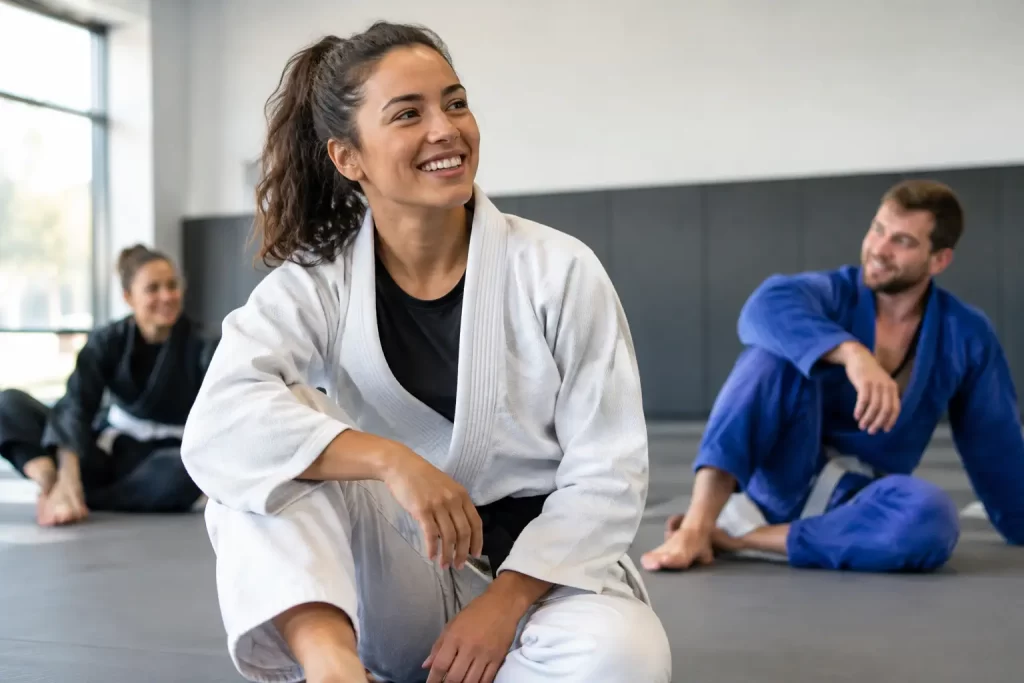
Walking into your first BJJ classes can feel like the hardest part. You may wonder if everyone will be more experienced, fitter, or tougher than you. The truth is that a good academy is built to help new students take that first step, learn at a safe pace, and become stronger through consistent training.
Brazilian Jiu-Jitsu is a practical martial art centered on control, leverage, positioning, escapes, and submissions. It gives people a way to handle close-range situations without relying only on size or strength. But the benefits reach well beyond the technique. Training can improve your fitness, build self-confidence, create discipline, and give you a focused outlet after a demanding workday.
What Happens in BJJ Classes?
A structured class gives you a clear path instead of leaving you to figure things out alone. You will usually start with a warm-up that prepares your body for movement on the mat. This may include mobility drills, bodyweight exercises, and Jiu-Jitsu-specific movements such as shrimping, bridging, and technical stand-ups.
From there, an instructor demonstrates a technique in manageable steps. You might learn how to escape from the bottom, control an opponent from a dominant position, defend a takedown, or apply a submission safely. Students partner up to practice the movement slowly before adding resistance. The goal is not to overpower your training partner. It is to understand the position, make smart decisions, and repeat the technique until it starts to feel natural.
Many classes also include live training, often called rolling. This is controlled sparring where students test their skills with a resisting partner. Beginners are not expected to perform perfectly. In fact, rolling is where many people learn that staying calm, protecting themselves, and using good positioning matter more than trying to win every exchange.
The pace depends on your experience, physical condition, and goals. A first-day student may spend more time learning basic movement and working with a supportive partner. An experienced student preparing for competition may train at a higher intensity. Both belong on the same mat when the culture is respectful and the coaching is attentive.
Why BJJ Classes Work for Beginners
You do not need a martial arts background to start. You do not need to be in peak shape, either. BJJ classes help build conditioning while you learn, which makes them different from waiting until you feel “ready” to join a gym.
For beginners, the first few weeks are about learning how to move efficiently and stay composed in unfamiliar positions. It can be humbling, but that is part of the value. You begin to see progress in practical ways: getting up with better balance, remembering a sequence, escaping a position that once felt impossible, or lasting another round without feeling overwhelmed.
A welcoming academy removes the pressure to prove yourself. Good training partners help you learn instead of trying to make every round a test. Experienced instructors explain the purpose behind techniques, correct details that keep you safe, and show you how to train hard without reckless intensity.
There is a trade-off to understand. Brazilian Jiu-Jitsu takes patience. You will not learn self-defense or become comfortable on the ground in one class. Progress comes from repetition, regular attendance, and a willingness to make mistakes. That process is exactly what builds lasting confidence. It is confidence based on work you have done, not just motivation you felt for a day.
Fitness With a Purpose
Traditional workouts can become repetitive when they do not connect to a meaningful goal. In Jiu-Jitsu, every drill, movement, and round has a purpose. You are developing strength, mobility, balance, grip endurance, coordination, and cardiovascular conditioning while learning a skill you can use.
The intensity is also adaptable. Someone focused on weight loss may benefit from consistent classes and challenging rounds that keep the heart rate up. A working professional may value the stress relief that comes from concentrating completely on the next movement. An athlete may use BJJ to develop body awareness and mental toughness. The common thread is that training asks you to be present.
You will have difficult days. Some classes will leave you tired, and some techniques will take longer to understand than you want. The answer is not to compare your beginning to someone else’s years of training. Show up, ask questions, and keep building. Small improvements compound quickly when you train consistently.
BJJ Classes for Kids and Families
For kids, Brazilian Jiu-Jitsu provides more than physical activity. It teaches them how to listen, follow directions, manage frustration, and treat training partners with respect. Those lessons can carry into school, friendships, and home life.
Children also gain confidence by learning how to respond under pressure. Bullying prevention is not about encouraging kids to fight. It is about helping them use awareness, boundaries, self-control, and practical skills when they need them. A child who feels capable is often less likely to panic or feel powerless in a difficult situation.
The right kids program balances structure with encouragement. Young students need clear expectations, but they also need coaches who notice effort and celebrate growth. Over time, a child who was hesitant to step onto the mat may become the student who helps welcome a new teammate.
Families benefit when martial arts becomes a shared routine. Parents appreciate an activity that supports fitness and discipline, while kids have a positive place to build friendships. An inclusive academy can feel like an extended community, with people encouraging one another through milestones on and off the mats.
Choosing the Right Academy
Not every martial arts school offers the same experience. The coaching, class structure, safety standards, and gym culture all matter. Look for instructors who can teach beginners clearly while still challenging experienced students. Real combat-sports experience is valuable, but the ability to coach with patience and professionalism matters just as much.
Pay attention to how people train together. Are newer students welcomed? Do partners control their intensity? Are techniques taught with an emphasis on safety and respect? A competitive room can be an excellent place to grow, but competition should never mean ego-driven training or ignoring a student’s limits.
A trial class is one of the best ways to find out whether an academy is the right fit. You can see how instruction is delivered, meet the coaching team, and experience the atmosphere for yourself. At Champions BJJ, students can start with a free trial class and a conversation about their goals, whether those goals are self-defense, fitness, competition, or a stronger routine for the whole family.
How to Get the Most From Your Training
Consistency matters more than trying to do everything at once. Two or three classes each week can create meaningful progress when you give yourself time to learn. Arrive a few minutes early, stay open to feedback, and choose training partners who help you develop safely.
It also helps to define your reason for starting. Maybe you want to get in better shape, feel more confident in your ability to protect yourself, manage stress, or give your child a constructive challenge. Your reason will keep you going when a class feels tough or your schedule gets busy.
Respect the process. Tap early when you are caught in a submission, communicate with your partners, and take care of your body. There is no prize for training through an injury or forcing a technique that is not there. Smart training keeps you on the mat long enough to become genuinely skilled.
The best time to begin is not when you feel fearless or fully prepared. It is when you decide that becoming stronger, healthier, and more capable is worth one first class. Step onto the mat, focus on the next lesson, and let your progress speak for itself.
