
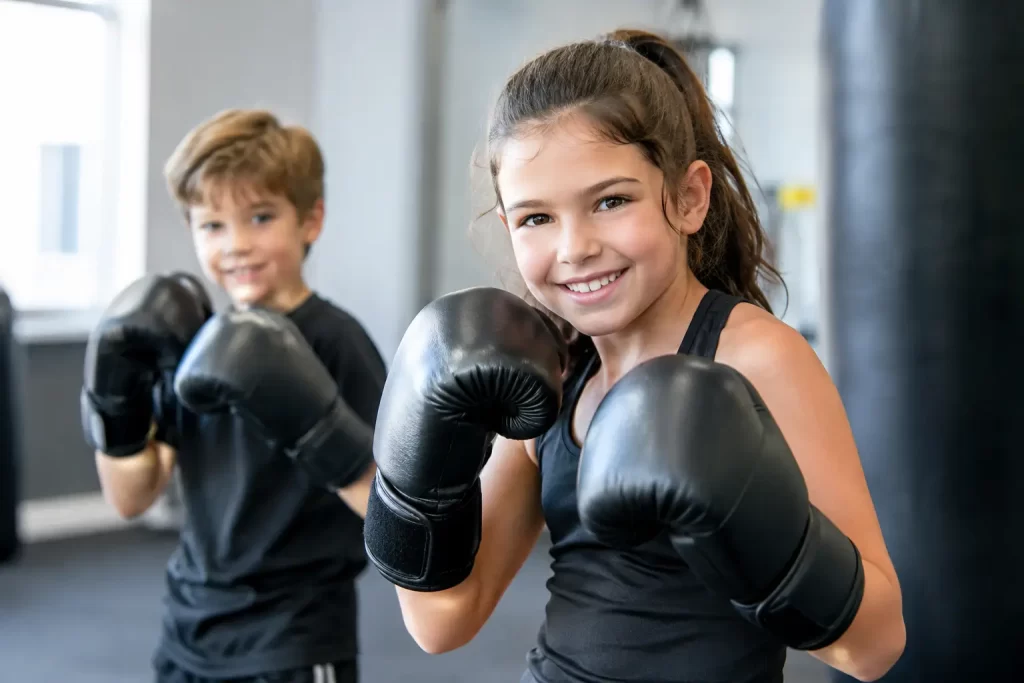
A child who walks into their first kids boxing class may be quiet, restless, unsure of their coordination, or carrying the weight of a tough school day. With the right coaching environment, they leave having moved their body with purpose, listened closely, tried something challenging, and earned a small win. Those wins add up.
For North Houston parents, boxing can be far more than a sport. It is a structured outlet where kids learn to stand tall, stay calm under pressure, and respect themselves and the people training beside them. The goal is not to turn every child into a fighter. The goal is to help them build the habits and confidence that carry into school, friendships, sports, and daily life.
What Kids Boxing Should Teach Beyond Punches
Good youth boxing classes are built around age-appropriate skill development, not hard contact. Children learn athletic movement, balance, footwork, stance, basic punching mechanics, defensive awareness, and controlled pad work. They also learn how to follow directions, take turns, handle corrections, and keep working when a drill feels difficult.
That structure matters. Kids often have plenty of energy but need a healthy place to direct it. Boxing training gives that energy a job. Instead of simply telling a child to focus, class gives them a reason to focus: keep their guard up, move their feet, listen for the coach’s cue, and finish the round with effort.
The physical benefits are easy to see over time. Kids develop coordination, stamina, mobility, and body awareness while getting a break from screens and sedentary routines. Just as valuable are the less visible changes. A child who used to avoid challenges may start raising their hand to demonstrate a drill. A child who gets frustrated quickly may learn to reset, breathe, and try again.
Is Boxing Safe for Children?
This is the first question many parents should ask, and it is the right one. Kids boxing should be safe because safety is designed into the program, not because adults hope nothing goes wrong.
A well-run class puts coaching, control, and proper progressions first. Young students should spend most of their time learning movement, technique, fitness, and pad work under close supervision. Contact, if it is ever included for older and more experienced students, should be carefully managed, optional where appropriate, and never treated as a test of toughness.
Parents should be cautious of any program that glorifies children getting hit, throws beginners into unsupervised sparring, or treats intensity as more important than instruction. Real combat-sports coaching is disciplined. It teaches children that power without control is not skill.
The best setting will have clear expectations: respect training partners, use equipment correctly, listen immediately when a coach calls time, and report discomfort or injury. Coaches should know how to adapt drills for different ages, sizes, fitness levels, and confidence levels. A seven-year-old beginner does not need the same training experience as a teenager preparing for competition.
The Confidence Kids Bring Home
Confidence is not loudness. For many children, real confidence looks like making eye contact, speaking up when they need help, recovering after a mistake, or walking into a new room without shrinking back.
Boxing creates repeated opportunities to practice those skills. Students face manageable challenges every class: learning a combination, holding pads for a partner, completing a conditioning drill, or staying focused through a round. They learn that being new at something is temporary. Consistent effort changes what they can do.
This can be especially helpful for children dealing with bullying or social pressure. Boxing does not promise to solve every school problem, and it should never encourage a child to fight outside the gym. What it can do is teach posture, awareness, emotional control, and self-respect. A child who feels more capable often carries themselves differently. They are also better prepared to seek help, use their voice, and make smart choices when a situation feels wrong.
Parents can support this growth by asking better questions after class. Instead of only asking, “Did you win?” try, “What was hard today?” or “What did your coach help you improve?” This reinforces that progress matters more than being perfect.
What a Great Kids Boxing Class Looks Like
Every academy has its own format, but a quality class should feel organized from the first few minutes. Kids arrive, greet their coaches and teammates, and understand where to stand and what to do. That predictability helps children settle in and gives parents confidence that training time is being used well.
Classes commonly begin with a warm-up that builds coordination and prepares the body to move. From there, coaches teach a small number of skills, then give students plenty of guided repetitions through drills, bags, focus mitts, or partner exercises. Conditioning may be included, but it should be challenging without becoming punishment.
The atmosphere should have standards without being intimidating. Children need to know that respect, effort, and attention are expected. They also need to know it is okay to ask questions, make mistakes, and begin as a complete novice. The strongest youth programs create both accountability and belonging.
At Champions BJJ, that balance is central to the training experience. Kids train with structured instruction, encouraging coaches, and a team culture that helps new students feel part of the Champions Family from day one.
Choosing the Right Program for Your Child
Not every child will fall in love with boxing for the same reason. One may enjoy the fast pace and athletic challenge. Another may need the routine, friendships, or confidence that comes from learning a new skill. The right program meets the child where they are while still asking them to grow.
When visiting a class, pay attention to more than the equipment. Watch how coaches correct students. Are they clear, patient, and engaged? Do they know the children’s names? Are experienced students helping create a positive example? Is there a visible difference between focused training and chaotic roughhousing?
Also consider practical fit. A class schedule only helps if your family can attend consistently. Younger children may benefit from shorter, highly structured sessions, while older students may be ready for more detailed technique and conditioning. If your child has sensory needs, anxiety, previous injuries, or concerns about contact, discuss them directly with the coaching team before enrolling. A good academy welcomes that conversation.
A trial class is often the clearest way to decide. Your child can experience the pace, meet the coaches, and see whether the environment feels challenging in the right way. Give a nervous beginner permission to take a little time. The first class can feel unfamiliar, but a supportive room changes that quickly.
Help Your Child Get the Most From Training
Consistency beats intensity for young athletes. One or two classes each week, attended regularly, can build meaningful progress over time. Children do not need to be naturally coordinated, outgoing, or athletic before they start. They need a place where effort is noticed and practice is expected.
Encourage your child to arrive on time, bring water, and treat coaches and teammates with respect. Celebrate the moments that show character: helping a new student, listening after a correction, finishing a difficult round, or returning after a frustrating class. Those are the habits that turn martial arts training into personal growth.
The best first step is simply letting your child try. A welcoming class can give them a new way to move, a stronger sense of discipline, and a community that believes they can do hard things.
