
The treadmill is not the problem. The real problem is trying to return to a workout you do not enjoy after a long day at work, a school pickup, or a stressful week. Martial arts for weight loss gives training a purpose beyond the scale: you are learning a skill, building confidence, and showing up with people who expect to see you improve.
For many adults, that purpose is what turns a short-term fitness push into a sustainable routine. Brazilian Jiu-Jitsu, boxing, kickboxing, and mixed martial arts challenge your body while keeping your mind engaged. You are not counting down minutes. You are practicing combinations, solving problems, moving with intention, and getting a little better every class.
Why Martial Arts for Weight Loss Works Differently
Weight loss still comes down to a consistent calorie deficit over time. No martial art changes that basic fact. What martial arts can change is the consistency piece, which is where many fitness plans fall apart.
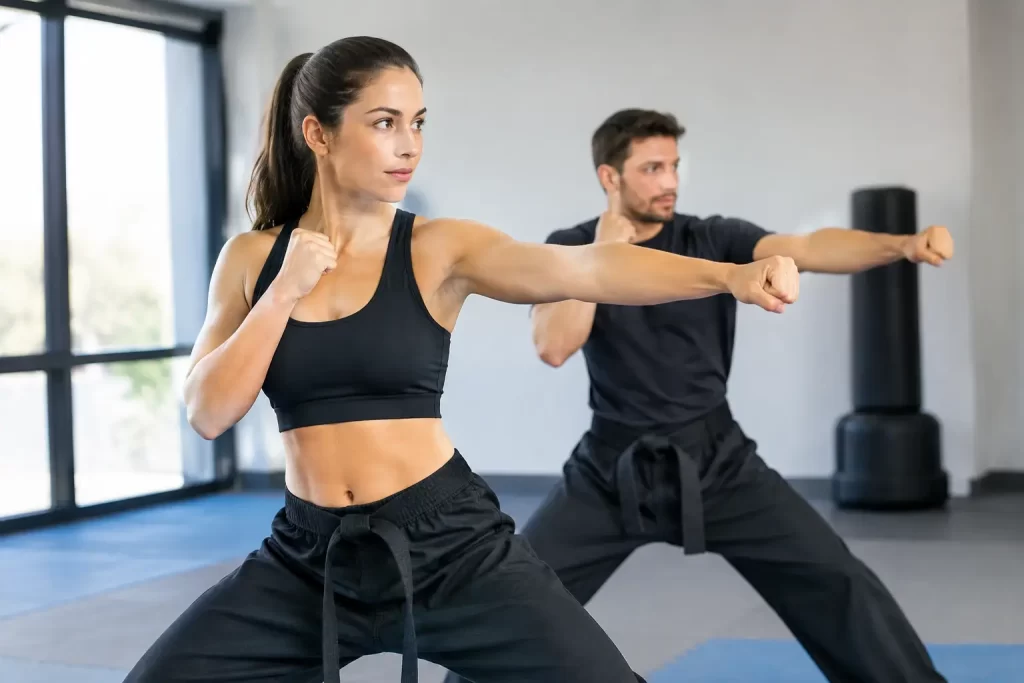
A good class combines conditioning with real instruction. In boxing or kickboxing, you may work footwork, punches, kicks, defensive movement, bag drills, and partner drills. In Brazilian Jiu-Jitsu, you learn positions, escapes, transitions, and controlled sparring. Your heart rate rises because you are moving your whole body, but your attention stays on the lesson in front of you.
That mental engagement matters. A workout that feels like a chore is easy to skip. Training that helps you feel stronger, more capable, and more connected to a team gives you a reason to come back, even when motivation is low.
Martial arts also develop fitness in several directions at once. You can improve cardiovascular endurance, muscular endurance, coordination, mobility, balance, and body awareness. That does not mean every class is an all-out calorie-burning contest. It means your body is adapting to useful work, and those improvements can make it easier to stay active outside the gym too.
Which Martial Art Is Best for Your Goal?
The best style for weight loss is usually the one you genuinely want to train consistently. Still, each program offers a different kind of challenge.
Boxing and kickboxing: fast-paced conditioning
Boxing and kickboxing are excellent choices for people who want energetic training with clear, visible progress. Learning how to stand, move, punch, kick, and defend requires repeated full-body effort. Pad work and bag rounds can be demanding, while technique drills teach you how to generate power without wasting movement.
These classes often appeal to beginners who want a direct fitness outlet. They can also be a powerful way to manage stress after work. You do not need to arrive in great shape or have any fighting experience. You need a willingness to learn, pace yourself, and keep practicing.
Brazilian Jiu-Jitsu: conditioning with a problem to solve
Brazilian Jiu-Jitsu can surprise people who assume it is a slower workout. Grappling requires grip strength, core control, hip movement, patience, and steady pressure. Even a technical round can leave you breathing hard because you are using muscles in ways traditional gym workouts often miss.
BJJ is especially helpful for people who get bored doing repetitive cardio. Every training session presents a new challenge: escape a bad position, maintain balance, control distance, or connect a technique you have practiced. Progress is measured in more than calories burned. You begin to notice that you can move better, stay calmer under pressure, and solve problems you could not solve a few weeks earlier.
Mixed martial arts: varied and demanding
MMA blends striking, grappling, wrestling, and transitions. The variety can be a strong fit for adults who want broad combat-sports training and do not want the same workout every day. Because it combines multiple skills, beginners should focus first on fundamentals and safe training habits rather than trying to match the pace of experienced fighters.
You do not need to compete to benefit from MMA training. A well-coached beginner program can provide structure, fitness, and practical skills in a supportive environment.
What Results Can You Realistically Expect?
The honest answer is: it depends on your starting point, class attendance, recovery, nutrition, sleep, and daily activity. A person who trains twice a week but eats far beyond their needs may feel fitter without seeing much change on the scale. Someone who pairs training with sensible nutrition and regular movement will usually see more noticeable progress.
Avoid judging success only by weekly weigh-ins. Water retention, soreness, stress, and normal body fluctuations can hide progress temporarily. Pay attention to other markers: how your clothes fit, your energy through the day, your ability to finish rounds, your resting heart rate, and how confident you feel walking into class.
For a practical starting point, aim for two or three martial arts classes per week. Add easy walking on non-training days if your schedule allows. That combination is realistic for many busy adults and is easier to maintain than trying to train hard every day from the beginning.
The Part Outside Class That Matters Most
Martial arts can support weight loss, but training does not give anyone a free pass to ignore nutrition. Extreme diets are rarely the answer, especially if they leave you tired, irritable, and unable to recover for class.
Start with basics you can repeat. Build meals around protein, fruits or vegetables, high-fiber carbohydrates, and foods that keep you satisfied. Drink water regularly. Plan for the times you tend to make rushed choices, such as late evenings after work or weekends with family events. Small changes that fit your life beat a perfect plan you abandon after ten days.
Recovery deserves the same respect. Beginners often feel excited and try to train at maximum effort every session. That can lead to excessive soreness, burnout, or injury. Give your body time to adapt. Sleep enough, listen to your coaches, and let technique improve before you worry about going harder.
A Beginner Plan That Builds Momentum
Your first month should be about becoming a regular, not proving how tough you are. Attend two classes each week on days you can protect on your calendar. Arrive a few minutes early, introduce yourself to the coaches, and tell them you are new. Good instruction should give you modifications, clear direction, and a safe pace for your current fitness level.
At home, keep the goal simple: take a 20- to 30-minute walk on two or three non-class days, and prepare a few reliable meals that make better choices easier. Do not add complicated workout plans just because you feel motivated during week one. Build a routine you can still follow during a busy month.
The right academy environment makes a real difference. You should feel challenged, but not embarrassed for being a beginner. You should be able to ask questions, train safely with partners, and feel accountability from people who want to see you succeed. At Champions BJJ, that support is part of the Champions Family experience: serious training, experienced coaching, and a place where newcomers can grow at their own pace.
Do You Need to Be Fit Before You Start?
No. You start martial arts to become fitter, not because you have already earned a place in class. Many people delay training because they worry about being out of shape, uncoordinated, or too old to begin. Those concerns are common, and a quality beginner class is designed to meet you where you are.
You may need to adjust intensity, take breaks, or work around prior injuries. If you have a medical condition or have been inactive for a long time, talk with a healthcare professional before starting a new exercise program. Then let your instructor know what you need. Smart training is not a weakness. It is how you stay consistent long enough to get results.
Your first class does not have to be perfect. Put on comfortable workout clothes, show up willing to learn, and give yourself permission to be new. The stronger version of you is built one round, one class, and one kept promise at a time.
