
You do not need to be in fighting shape before you walk through the door. Kickboxing classes for beginners are where many people build that shape, along with confidence, stress relief, and the discipline to keep showing up. Your first class is not a test of how tough you are. It is a starting point.
At a quality martial arts academy, beginners train alongside people with different goals. Some want a better workout than the treadmill can offer. Some want practical self-defense skills. Others need a healthy outlet after a long day at work or want to feel more capable in their own bodies. The common thread is simple: everyone starts somewhere.
What Beginners Actually Learn in Kickboxing Class
Kickboxing is a striking martial art built around punches, kicks, footwork, movement, and defense. A beginner class breaks those pieces down so you can learn with control before worrying about speed or power.
You will usually begin with stance and guard. Your stance gives you balance, helps you move efficiently, and puts you in position to throw strikes safely. Your guard teaches you where to keep your hands and how to protect yourself while moving. These may look basic, but they are the foundation behind every clean punch, kick, and defensive movement.
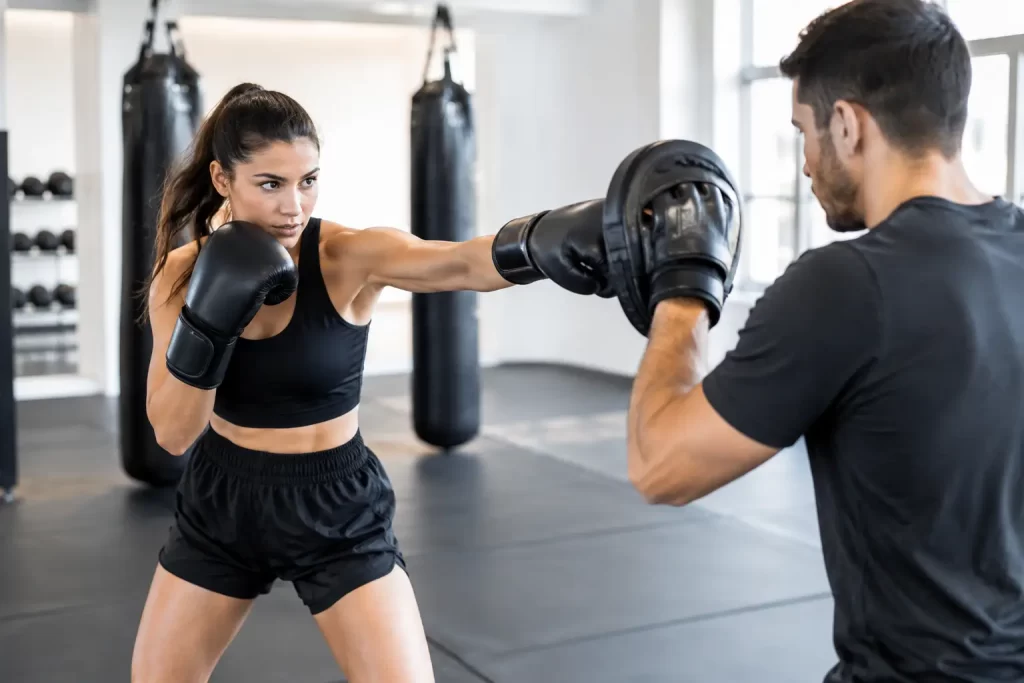
From there, instructors introduce punches such as the jab, cross, hook, and uppercut. You may learn basic kicks, knees, and combinations on pads or heavy bags. Good coaching focuses on proper mechanics: turning your hips, keeping your hands up, returning to balance, and breathing with each strike.
Defense is part of the process, too. You may practice blocking, parrying, slipping, or stepping out of range. That does not mean your first day turns into a fight. Beginners should have time to understand movements in a controlled setting before adding more pressure.
Technique Comes Before Power
A hard punch with poor form can strain your wrist, shoulder, or elbow. A powerful kick thrown without balance can put stress on your knee or hip. That is why experienced instructors will correct your stance, posture, and mechanics early.
It can feel humbling to slow down when you are eager to work hard. But clean technique gives you better results over time. Once your body understands the movement, speed and power can develop naturally.
What a First Kickboxing Class Feels Like
Expect to sweat, move, and learn a lot in a short amount of time. Most beginner kickboxing classes include a warm-up, technical instruction, drilling, conditioning, and a cool-down or final review.
The warm-up may include light jogging, mobility exercises, bodyweight movements, or simple shadowboxing. Shadowboxing means practicing strikes and movement without hitting a target. It may feel unusual at first, but it helps you connect footwork, balance, and technique.
Next, an instructor might demonstrate a combination such as a jab-cross followed by a front kick. You will practice it slowly, often with a partner holding pads or on a heavy bag. Pads let you hit a target while a coach helps you develop timing, distance, and accuracy.
Conditioning may include rounds of bag work, pushups, squats, core exercises, or movement drills. The intensity depends on the class and your current fitness level. You should work hard, but you should not feel pressured to keep pace with someone who has trained for years.
A strong academy gives beginners options. If you need to reduce the number of repetitions, take a quick water break, or modify an exercise, that is part of training intelligently. Consistency matters more than trying to prove everything in one session.
Do You Need to Be Fit Before You Start?
No. You need the willingness to begin.
Kickboxing can be demanding because it uses your full body. You are moving your feet, using your core, working your shoulders, and engaging your legs with every kick. That is exactly why it can be such an effective way to improve conditioning and support weight-loss goals.
Still, fitness is not one-size-fits-all. Someone returning to exercise after years away will have a different starting point than a former athlete. A good instructor recognizes that difference and helps each student train at an appropriate level.
Your first few classes may leave you sore in places you did not expect, especially your calves, hips, shoulders, and core. That is normal when your body is adapting to new movements. Sharp pain, dizziness, or joint pain is different. Tell your instructor if something does not feel right so they can adjust your training.
What to Bring to Your First Class
You do not need to arrive with a full collection of combat-sports gear. Most new students can start with comfortable workout clothes, a water bottle, and a positive attitude. Athletic shorts or leggings and a T-shirt that allows you to move are usually a good choice.
If you have boxing gloves or hand wraps, bring them. If not, ask the academy what equipment is available for a trial class and what you will need after you join. Hand wraps support your wrists and knuckles, while gloves protect your hands during pad and bag work.
Avoid jewelry, watches, or anything that could catch on equipment or another person. Keep your nails trimmed if partner drills are part of class. Small details like these help keep training safe and respectful for everyone.
Will Beginners Have to Spar?
Not necessarily. Sparring is a valuable training tool, but it is not the same as a beginner workout or technical drilling. It adds timing, movement, decision-making, and controlled contact, so it should be introduced when you have the skills and comfort level for it.
In a responsible program, sparring is supervised, structured, and optional based on the class format. You should never be thrown into hard contact just because you are new. Learning to hit pads, move with a partner, and defend simple combinations builds a strong base first.
If your goal is fitness, confidence, or basic self-defense, you can gain a great deal from kickboxing without becoming a competitive fighter. If competition is your goal, training can progress toward that path with the right coaching and preparation.
Why Kickboxing Builds More Than Fitness
A good workout can improve your energy. Martial arts training can also change how you carry yourself outside the gym.
Every class asks you to focus. You listen, practice, make mistakes, receive corrections, and try again. Over time, that process builds discipline and resilience. You learn that progress is earned through repetition, not instant perfection.
Kickboxing also gives stress a productive place to go. Hitting pads and bags is physically demanding, but the benefit is not just the impact. It is the mental reset that comes from being fully present in the work. For an hour, your attention is on your breathing, your movement, and the next combination.
There is also confidence in knowing you can learn practical skills. Confidence is not about looking for confrontation. It is about feeling calmer, more prepared, and more capable when life gets difficult.
How to Choose Kickboxing Classes for Beginners
The atmosphere matters as much as the workout. Look for an academy where instructors take time to teach fundamentals, correct technique, and learn students’ names. The room should feel focused and welcoming, not careless or intimidating.
Ask how beginner students are introduced to the program. Find out whether classes include modifications for different fitness levels, how safety is handled, and whether instructors have real experience in the sport. Great coaches can challenge you without making you feel left behind.
Community matters, too. Training is easier to sustain when people encourage one another and hold each other accountable. At Champions BJJ, students train in a family-friendly environment where newcomers can learn serious skills without needing to arrive as experts.
A free trial class or consultation can help you decide if the academy is the right fit. Pay attention to how you are welcomed, how clearly the class is taught, and how you feel after you finish. Tired is expected. Supported, challenged, and eager to return are even better signs.
Start Where You Are
The biggest obstacle for most beginners is not a lack of athletic ability. It is waiting for the perfect moment to start. There will always be a busy week, a fitness goal you have not reached yet, or a reason to put it off.
Show up anyway. Start with one class, learn one stance, throw one combination, and give yourself room to improve. The person you become through steady training is built one round at a time.
