
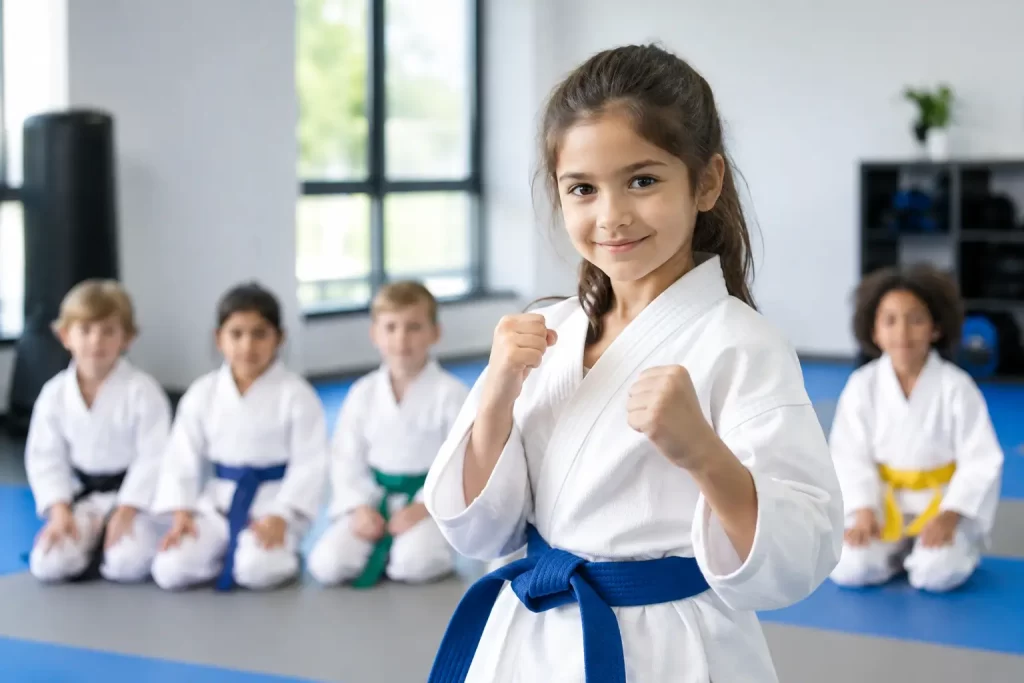
A child does not need to become aggressive to stop being targeted. They need to stand taller, speak clearly, recognize unsafe situations, and know that adults and teammates have their back. That is where martial arts bullying prevention can make a real difference. The goal is never to teach kids to fight at school. It is to help them build the confidence, discipline, and practical awareness to avoid conflict whenever possible.
For many parents, bullying is not a single event with an easy answer. It can show up as teasing, exclusion, online harassment, intimidation, or repeated physical behavior that leaves a child anxious about school. Martial arts gives children a structured place to grow stronger in body and character while learning how to respond with control.
Why confidence changes the bullying dynamic
Bullies often look for a reaction. They may target children who appear isolated, unsure, or unlikely to speak up. Confidence does not guarantee that a child will never face bullying, but it can change how they carry themselves and how they respond when a difficult moment happens.
In a quality martial arts class, kids practice being heard. They answer questions, work with partners, follow directions, and gradually take on challenges that once felt intimidating. A beginner who was nervous to step on the mat may eventually lead warmups, help a newer student, or calmly practice a difficult technique in front of the group. Those small wins add up.
That confidence should look calm, not confrontational. A child who has trained consistently is more likely to use a firm voice, create space, walk away, and get help. They are learning that strength includes restraint.
Martial arts bullying prevention is not about fighting
Parents sometimes worry that combat sports will make a child more likely to use physical force. Good instruction does the opposite. It teaches children that physical skills come with responsibility.
Brazilian Jiu-Jitsu, boxing, kickboxing, and other martial arts can teach coordination, awareness, and self-defense skills. But the most valuable lesson for everyday school situations is decision-making. Students learn when not to engage, how to manage their emotions under pressure, and why a physical response can bring serious consequences even when they feel provoked.
A responsible academy makes the standard clear: avoid the situation if possible, use words and distance, find a trusted adult, and use physical self-defense only when there is an immediate need to protect yourself from harm. That approach respects both a child’s safety and the realities of school rules.
The value of controlled training
Training is different from a hallway confrontation. On the mat, children learn with supervision, clear boundaries, protective rules, and coaches who correct unsafe behavior immediately. They learn to practice with many personalities and body types. They also learn that tapping, pausing, and listening are signs of maturity, not weakness.
This controlled environment can be especially helpful for kids who freeze under pressure. Repetition helps them become more familiar with stress, physical proximity, and problem-solving. The result is not a child looking for a fight. It is a child who is less likely to panic when someone tries to intimidate them.
Skills kids carry from the mat to school
The physical side of martial arts matters, but the everyday habits matter just as much. Consistent training builds a stronger foundation for handling challenges at school, at home, and with friends.
Kids learn posture and body language. They learn to make eye contact, use a clear voice, and set boundaries without yelling. They practice listening, taking correction, and returning after a tough round or a hard day. These are real resilience skills.
They also become part of a team. A child who feels connected to supportive coaches and training partners is less likely to feel alone. That sense of belonging can be powerful when school feels difficult. At Champions BJJ, the goal is to help every student become part of the Champions Family while developing the discipline to meet challenges with confidence.
What parents should look for in a martial arts program
Not every program approaches youth development in the same way. The best fit is not necessarily the class with the loudest promises about making a child tough. Look for a school that builds toughness with patience, structure, and respect.
Experienced instructors should be able to explain how they teach conflict avoidance and how they handle safety during partner drills. They should welcome beginners without treating a child’s nervousness as a problem. A positive class still has standards: students should be expected to pay attention, respect partners, and keep trying when something is hard.
Ask whether the academy separates classes by age or experience when appropriate. Ask how instructors help students who struggle with confidence, focus, or emotional regulation. Watch a class if you can. Are the coaches attentive? Are older or more experienced students encouraged to help younger ones? Do kids leave the mat feeling challenged and supported?
A healthy gym culture does not use fear or humiliation as motivation. It teaches accountability. Children should understand that their choices matter and that they can improve through steady effort.
How parents can reinforce bullying prevention at home
Martial arts is one part of a larger support system. A child needs clear guidance at home and consistent communication with school staff when bullying is happening. Do not expect them to solve a repeated problem alone, even if they are training.
Start with specific questions instead of asking only, “How was school?” Try asking who they spent time with at lunch, whether anyone made them feel uncomfortable, or what part of the day felt hardest. Kids often share more when they do not feel pressured to give a perfect answer.
When they describe a problem, stay calm and listen before rushing to a solution. Help them practice a simple response they can remember: “Stop. I do not like that.” Then talk through the next step, such as moving toward friends, leaving the area, or telling a teacher, counselor, or administrator.
Pay attention to changes that may signal a deeper issue. A child may not use the word “bullying,” but they may suddenly avoid school, complain of frequent stomachaches, lose interest in activities, have trouble sleeping, or become unusually withdrawn or angry. Those changes deserve a supportive conversation and, when needed, prompt communication with the school.
When physical self-defense is necessary
There is a difference between defending yourself and retaliating. If a child is being physically attacked and cannot get away, they may need to protect themselves long enough to create distance and find help. Martial arts training can give them more control in that moment.
Still, the best response depends on the situation, the child’s age, school policy, and the level of danger. Parents should be direct: use skills to stay safe, not to punish someone or prove a point. After any physical incident, involve school leadership and document what happened.
Build confidence before there is a crisis
The best time to build a child’s confidence is not after a bullying situation has reached a breaking point. Regular training gives them a positive routine, healthy physical activity, trusted mentors, and measurable progress long before they need to handle a hard moment.
Some children love the energy of boxing or kickboxing. Others gain confidence through the close-range control and problem-solving of Brazilian Jiu-Jitsu. It depends on their personality, comfort level, and goals. A good first class lets them explore in a welcoming setting without needing prior experience.
Give your child a place where effort is noticed, discipline is practiced, and respect is expected. The message they carry into school can be simple and powerful: I know how to stay calm, I know when to get help, and I am not alone.
