
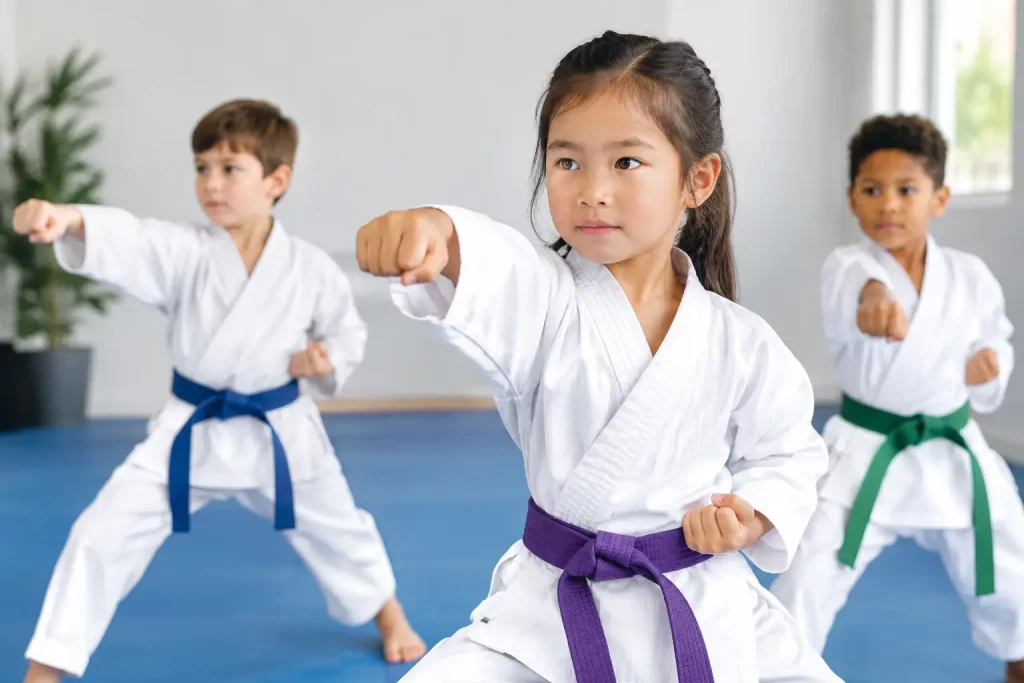
A child who avoids eye contact during a first class can become the one helping a new student learn the warm-up a few months later. That kind of change is why martial arts classes for kids are about far more than punches, kicks, or earning the next belt. In the right environment, training gives children a clear place to practice confidence, focus, respect, and perseverance.
For North Houston parents, the goal is usually not to turn a child into a fighter. It is to help them become more capable in everyday life: more comfortable speaking up, more willing to work through a difficult task, and more prepared to handle challenges without shutting down. Martial arts can support those goals when instruction is structured, age-appropriate, and led by coaches who know how to build kids up while holding them accountable.
What Kids Really Learn on the Mats
A good kids program teaches physical skills, but the life skills are what many families notice first. Children learn to listen closely, follow a sequence of directions, and control their bodies while moving with purpose. They also learn that progress comes from repetition. A technique that feels awkward on Monday may feel natural after consistent practice.
That lesson matters for children who get frustrated quickly. Martial arts gives them a healthy way to experience difficulty in small, manageable pieces. They may not get a movement right immediately, but they can try again, accept coaching, and see improvement over time. The win is not simply performing a technique correctly. It is learning that effort has value.
Training also creates an outlet for energy. Kids spend plenty of time sitting at school, in the car, and at home. A well-run class gets them moving, using coordination, balance, agility, and strength in a focused setting. They leave with the satisfying feeling of having worked hard, not just burned off energy.
Confidence Without the Attitude
Parents often want their child to be more confident, but real confidence is different from being loud or acting tough. It comes from competence. When a child learns how to stand with good posture, move with balance, defend personal space, and stay calm during a challenging drill, they carry themselves differently.
That does not mean martial arts makes every shy child instantly outgoing. Some children become more expressive; others simply become steadier and more self-assured. Both are meaningful forms of growth. The best programs make room for different personalities while encouraging every student to participate and improve.
Can Martial Arts Help With Bullying?
Martial arts can be a valuable part of a bullying-prevention plan, especially because it teaches children to stay composed under pressure. They practice awareness, boundaries, verbal confidence, and respect for others. Just as importantly, they learn that physical skills come with responsibility.
A quality academy should never teach a child to seek out conflict. The goal is avoidance whenever possible, getting help from a trusted adult, and protecting themselves only when necessary. Children should understand that strength means having control over their emotions and actions, even when someone else is trying to provoke them.
For some kids, the biggest difference is body language. A child who walks with better posture, makes eye contact, and speaks clearly may be less likely to appear like an easy target. For others, knowing they have trained can reduce the fear that makes school or social situations feel overwhelming.
Choosing Martial Arts Classes for Kids
Not every class is the same, and the right fit depends on your child’s age, personality, goals, and comfort level. A high-energy child may enjoy a class that channels movement into structured drills. A cautious child may need patient coaching and a smaller group before they feel ready to participate fully. Neither approach is better. The important thing is finding an academy that meets your child where they are and gives them a path forward.
When visiting a program, watch how instructors speak to students. Clear direction and high standards are good signs. So are coaches who correct mistakes without embarrassing kids. Children need discipline, but they also need to know that mistakes are part of learning.
Look at how students interact with one another, too. Training should be challenging without becoming chaotic or aggressive. Younger students should have close supervision, and partner work should be carefully matched by size, age, and experience when needed. A family-friendly culture is not one where children are allowed to do whatever they want. It is one where everyone is expected to train safely, show respect, and support the people around them.
Questions Worth Asking Before You Enroll
Ask whether classes are separated by age or skill level, how instructors handle nervous beginners, and what safety standards are used for partner drills. You can also ask how the academy approaches discipline, attendance, and advancement.
Pay attention to the answers. A good school will explain its process clearly rather than promising instant confidence or guaranteed black belts. Martial arts takes time. Programs that value steady development tend to create stronger results than those focused only on fast promotions or flashy demonstrations.
It is also wise to ask about a trial class. Watching from the lobby gives you one impression, but your child’s experience on the mats tells you much more. A free trial gives them a chance to meet the coaches, try the class structure, and decide whether they feel comfortable in the space.
Why Brazilian Jiu-Jitsu Can Be a Strong Starting Point
Brazilian Jiu-Jitsu is especially useful for children because it teaches body control, positioning, problem-solving, and calm decision-making. Rather than relying on size or strength alone, kids learn how leverage and technique can help them manage a situation. That can be empowering for smaller children and for kids who do not connect with traditional team sports.
Jiu-Jitsu also requires cooperation. Students train with partners, take turns, and learn to recognize when someone needs space or a break. They practice working through resistance without losing control. Those are meaningful social skills, especially for children learning how to navigate friendships, competition, and conflict.
Kickboxing, boxing, and other striking-based programs can also be excellent options when taught with the right emphasis on safety, technique, fitness, and discipline. The best choice depends on what motivates your child and how the academy structures its youth training. A coach can help guide that decision after seeing how your child moves, listens, and responds in class.
What the First Month Usually Looks Like
The first few classes can feel unfamiliar. Your child may be excited, quiet, distracted, or unsure about partnering with someone new. That is normal. Most children need a little time to learn the routine: where to line up, how to respond to instruction, how to use the equipment, and what is expected during drills.
Consistency matters more than a perfect first day. If possible, give your child several classes before deciding whether martial arts is a fit. Some kids love it immediately. Others need time to settle in and build trust with the instructors and classmates.
At home, keep your encouragement simple. Ask what they practiced, who they worked with, or what felt challenging. Avoid turning every class into a performance review. If they struggled, remind them that everyone in the room was new once. The habit of returning after a hard day is one of the most valuable lessons martial arts can teach.
Building a Stronger Kid, One Class at a Time
The right academy gives kids room to be kids while expecting them to rise to a standard. They can laugh, make friends, and enjoy moving, but they also learn when it is time to listen, work, and show respect. That balance is where confidence becomes durable.
At Champions BJJ, families can experience that environment before making a commitment through a free trial class and consultation. The goal is to help each child find a program where they feel welcomed, challenged, and proud of the work they put in.
Your child does not need to be naturally athletic, outgoing, or fearless to start. They only need a place where showing up, trying again, and treating others with respect are part of the routine.
